Spaces
Tiny Coffee Bar Ideas for Renters
A renter-friendly coffee bar should be removable, measurable, and useful on an ordinary morning. The nine ideas below avoid built-in cabinetry and permanent electrical work.
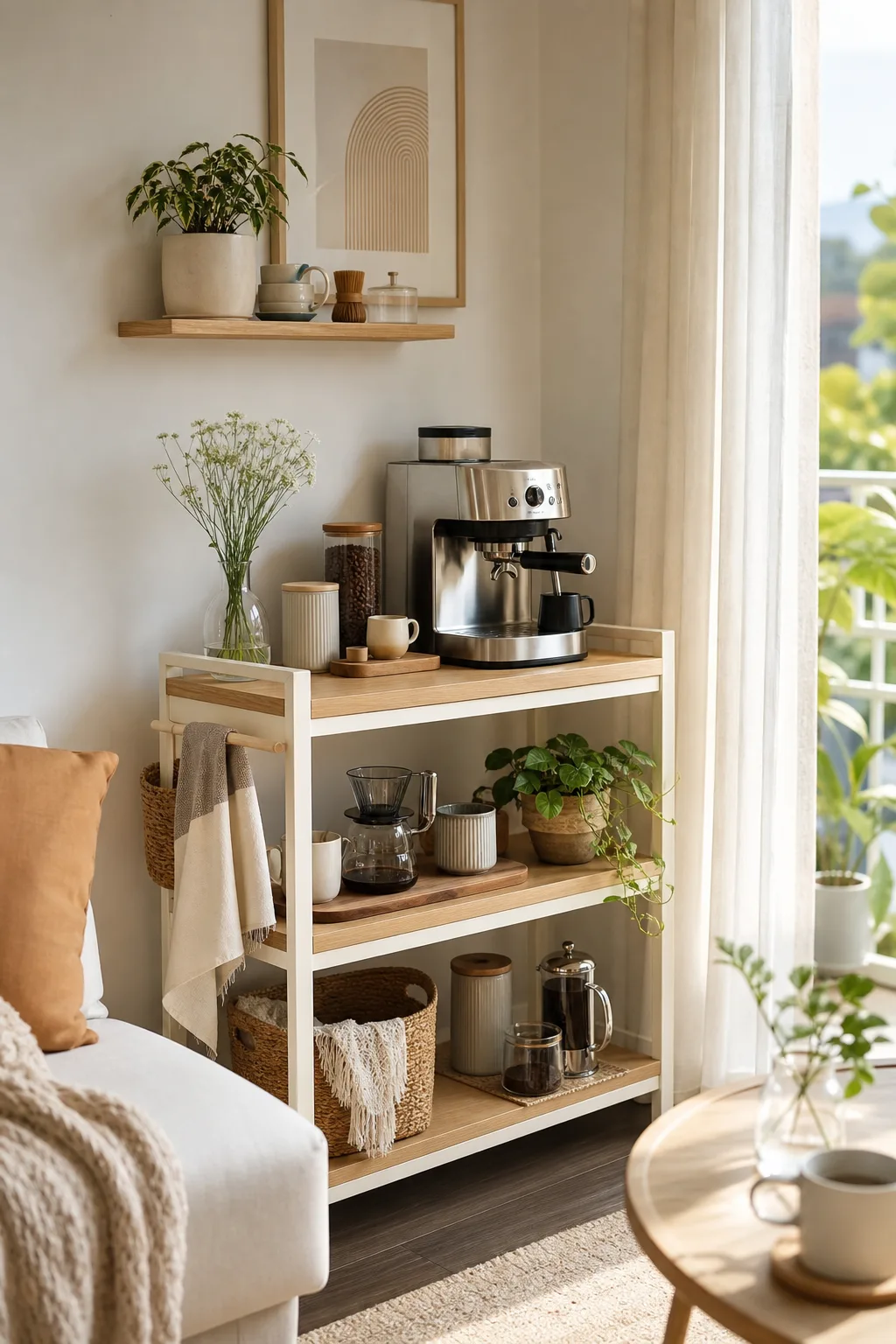
A renter-friendly coffee bar should be removable, measurable, and useful on an ordinary morning. The nine ideas below avoid built-in cabinetry and permanent electrical work. Choose one based on the space you can spare: counter, floor, cabinet, drawer, bookshelf, or dining surface.
Before buying anything, measure the brewer’s full working envelope—not only its base. Include the space needed to open the water lid, remove the reservoir, insert a portafilter, or lift a kettle. Then check your lease before attaching anything to a wall or cabinet.
1. A tray-defined counter station
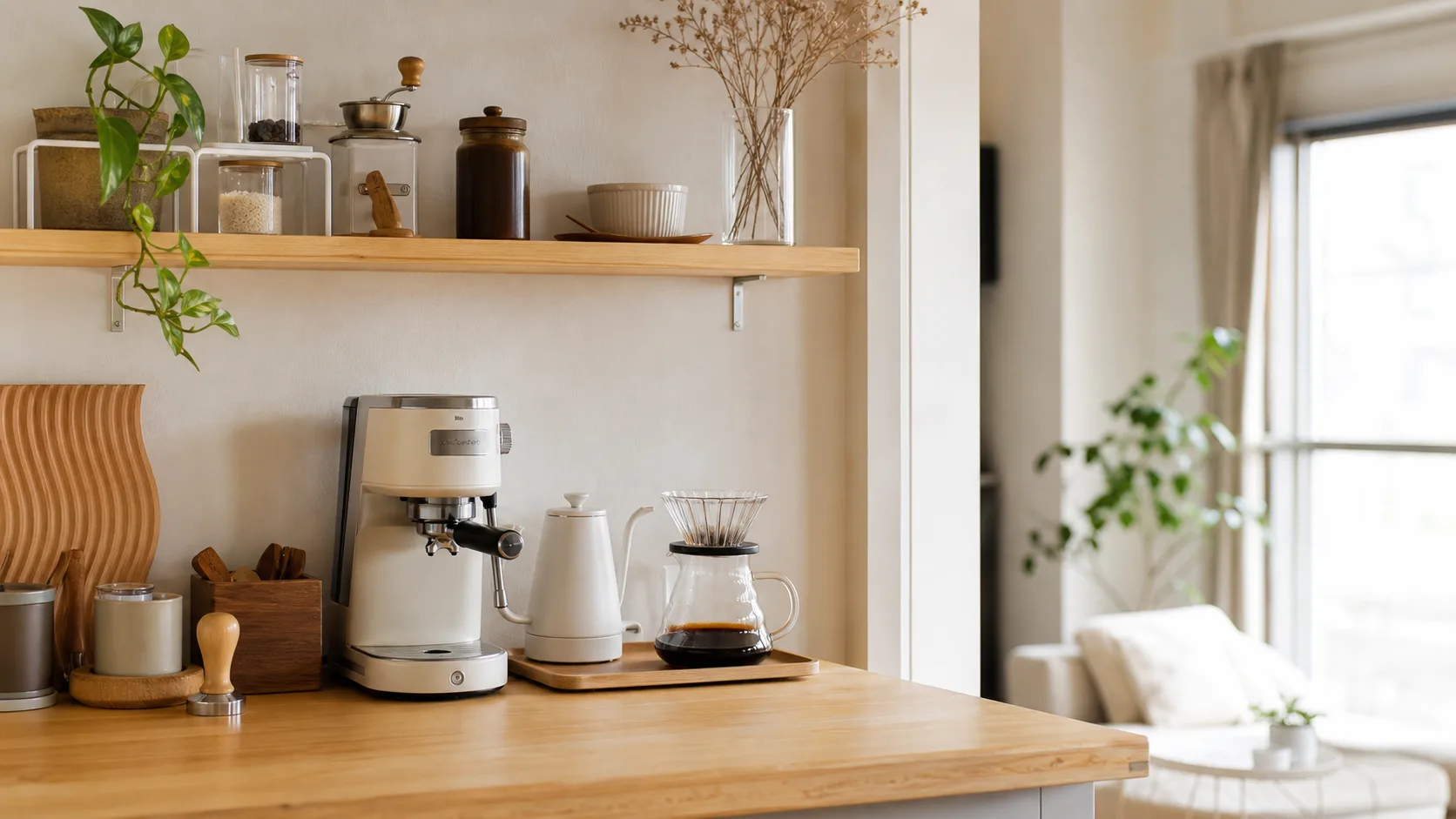
Use a washable tray to contain the brewer, coffee, and one daily mug on an existing counter. The tray creates a visual boundary without changing the apartment and makes it easier to move the group for cleaning.
Best when: You have counter depth but the surface looks scattered.
Skip it when: The tray would sit next to a stove burner, block a sink, or leave no room to operate the appliance.
Move-out work: None beyond cleaning.
2. A narrow rolling cart
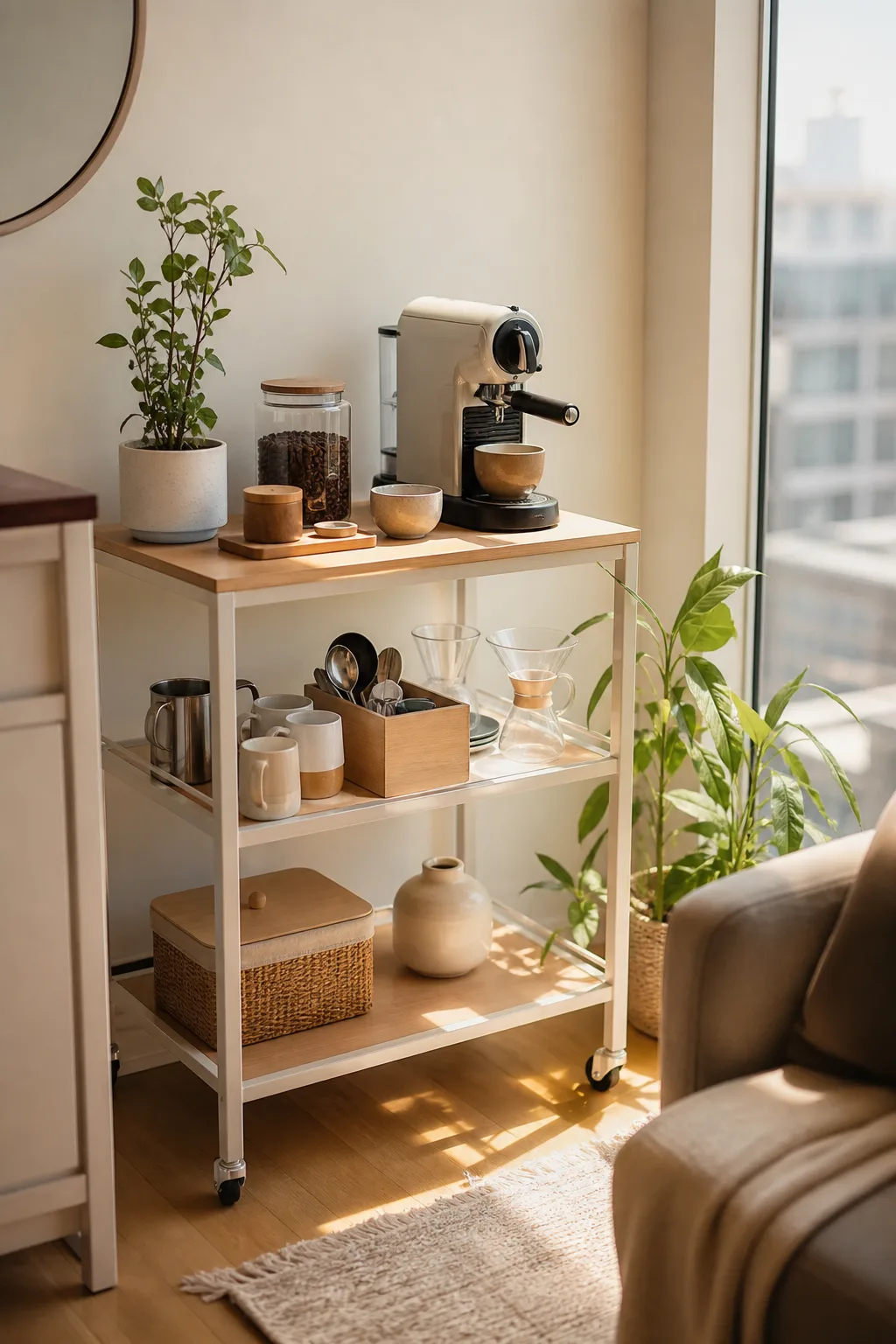
A three-tier cart turns a small patch of floor into vertical storage. Keep the appliance on top, cups and filters in the middle, and unopened supplies below. Park and lock the casters before brewing.
As a real size reference, IKEA lists its RÅSKOG cart at 13 3/4 by 17 3/4 by 30 3/8 inches, with a 40-pound maximum load. It was $39.99 on the US site when checked September 3, 2026. The same page says the shelves are not approved for direct food contact, so keep ingredients in food-safe packaging or containers.
Best when: You need storage that can roll beside a counter for use and away afterward.
Skip it when: The cart would narrow the only walkway or tempt you to stretch an appliance cord across the room.
Move-out work: Roll it out.
3. The inside-cabinet station
Reserve one lower or upper cabinet shelf for coffee, filters, and cups, then place only the appliance on the counter. This is the least visible option and uses storage the apartment already provides.
Best when: You want the kitchen to look quiet between drinks.
Skip it when: Reaching the shelf while carrying hot liquid would be awkward.
Move-out work: Wipe the shelf and remove your liner.
Do not run a heat-producing appliance inside a closed cabinet. Bring it to an open, stable surface and follow its clearance instructions.
4. A drawer-based brew kit
Use a shallow drawer for filters, scale, scoop, tea strainer, and cleaning brush. Add small removable bins so each tool has a stop point. The brewer stays above the drawer, while visual clutter disappears after use.
Best when: You own several small tools but do not need more display space.
Skip it when: The drawer is directly below a spill-prone edge or cannot close around the bins.
Move-out work: Lift out the bins.
5. A bookshelf coffee landing
Use the top of a sturdy freestanding shelf as a landing for mugs, sealed beans, and non-electric brewing tools. Keep the electric kettle or machine on a kitchen-rated surface near the correct outlet, then carry the finished drink to the shelf.
Best when: Your dining or living area needs storage, but the kitchen counter must remain clear.
Skip it when: The shelf wobbles, has a low published load limit, or would be exposed to repeated hot-water spills.
Move-out work: Reuse the shelf elsewhere.
6. A breakfast-table caddy
Place coffee, filters, napkins, and spoons in a handled caddy that lives on a shelf and comes to the table only when needed. This is a coffee bar by routine rather than permanent location.
Best when: Every horizontal surface serves more than one purpose.
Skip it when: The caddy becomes a storage bin for backup supplies instead of a compact daily kit.
Move-out work: None.
7. An under-shelf basket for lightweight supplies
A clip-on basket beneath an existing shelf can hold filters, paper napkins, or empty reusable pods without drilling. Measure the shelf thickness and the basket’s clearance before buying; a cabinet door still needs to close.
Best when: You have unused air below a shelf.
Skip it when: The shelf is glass, unusually thin, bowed, or prohibited by the basket manufacturer.
Move-out work: Unclip it and inspect the shelf.
Keep heavy mugs and appliances on supported surfaces. Lightweight supply storage is the point of this idea.
8. A sink-side drying-and-brewing zone
If your manual brewer must be rinsed immediately, place a small drip mat near—but not over—the sink and store the dripper after it dries. The station exists only during use, which protects scarce counter space.
Best when: Your routine uses a pour-over, AeroPress-style brewer, or tea tools that need quick rinsing.
Skip it when: Splashes can reach an outlet or plugged-in appliance.
Move-out work: Wash the mat.
9. A closet shelf refill zone
Keep unopened coffee, extra filters, syrups, and seasonal mugs on one labeled shelf outside the kitchen. The active station holds only a week’s supplies. This separates the daily footprint from the bulk inventory.
Best when: You buy coffee in larger bags or rotate cups.
Skip it when: The closet is hot, damp, or used for household chemicals that should stay separate from food.
Move-out work: Empty one shelf instead of dismantling a bar.
Choose the layout in ten minutes
- Mark the available footprint with painter’s tape.
- Put the brewer, mug, and coffee inside the outline.
- Rehearse filling, brewing, pouring, discarding grounds, and wiping the surface.
- Open every nearby door and drawer.
- Walk past the setup carrying a bag or laundry basket.
If the routine crosses a walkway, blocks a door, or requires a stretched cord, reject the location before adding storage.
What “renter-friendly” does not guarantee
Removable products can still mark weak paint, veneer, or wallpaper. Lease rules and wall finishes vary, so this guide favors freestanding and contained solutions. If you use adhesive hardware, follow the manufacturer’s surface, preparation, weight, and removal instructions and accept that your lease—not the marketing label—sets the final rule.
A move-out-ready checklist
- No new holes, wiring, plumbing, or built-in cabinetry
- Appliance can operate on a stable open surface
- Cords do not cross walking paths or sinks
- Doors, drawers, vents, and lids open fully
- Containers and furniture stay within their stated load limits
- The whole station can be removed without dismantling apartment fixtures
Pick the smallest idea that closes the daily workflow. A tray or drawer may solve the problem more cleanly than a new piece of furniture.
Source
Continue reading