Spaces
How to Build a Coffee Station Under $200
A complete apartment coffee station can fit under $200 without relying on sale prices or pretending you already own the brewer.
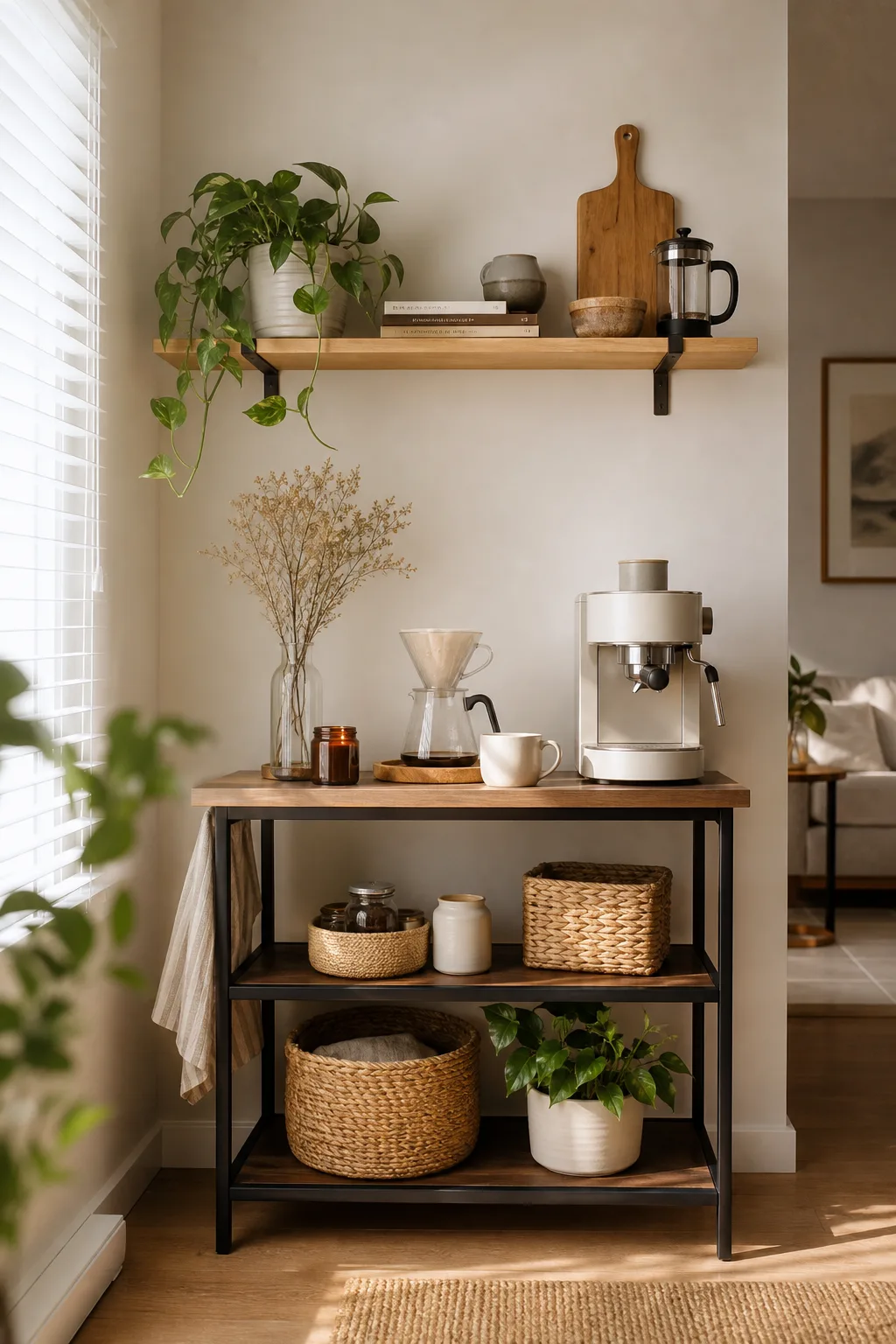
A complete apartment coffee station can fit under $200 without relying on sale prices or pretending you already own the brewer. The sample build below totals $113.98 before tax and delivery, using US prices checked on September 2, 2026. That leaves $86.02 for coffee, filters, local price differences, or one upgrade.
The setup is built around a compact drip machine and a narrow rolling cart. It is designed for someone starting from zero, not for an espresso workflow.
The $113.98 shopping list
| Item | Example | Checked price | Why it is included |
|---|---|---|---|
| Rolling storage | IKEA RÅSKOG utility cart | $39.99 | A movable three-tier footprint for the station |
| Brewer | BLACK+DECKER DCM600B 5-cup coffeemaker | $26.99 | Compact brewer, carafe, and removable filter basket |
| Coffee storage | Threshold small glass/acacia canister | $13.00 | Keeps an opened bag contained; using the original bag inside is fine |
| Two mugs | Threshold Avesta 16-ounce mugs | $6.00 | Two mugs at $3 each |
| Small tray | Room Essentials round ceramic tray | $12.00 | Corral spoons, filters, and sweetener |
| Cleaning and filter allowance | Unbranded/local purchase allowance | $16.00 | Cloth, dish brush, and compatible filters |
| Total | $113.98 | Before tax and delivery |
Prices and availability change by location. Recheck the linked product pages before buying. The cart’s published dimensions are 13 3/4 by 17 3/4 by 30 3/8 inches, and IKEA lists a maximum total load of 40 pounds. The coffeemaker product page describes it as a space-saving 5-cup model. Measure your wall, outlet location, and appliance footprint before ordering.
Decide whether you need the cart
If you already have 18 inches of clear counter width, skip the cart and keep $39.99 in reserve. Use a washable tray to define the station and place backup supplies in a nearby cabinet.
Choose the cart when counter space is the constraint and you have a safe place to park it. Lock the casters before brewing. Keep the machine on the top tier, with mugs and filters below. Do not place loose food directly on the cart shelves; IKEA states that this model is not approved for food contact, so keep beans and ingredients in their packaging or food-safe containers.
Lay out the station before plugging anything in
Use painter’s tape to mark the cart’s footprint on the floor. Confirm that a person can pass without catching a hip or bag on it and that cabinet doors still open. Then rehearse the brewing sequence:
- Fill the reservoir.
- Add the filter and coffee.
- Place the carafe.
- Brew and pour.
- Remove the used grounds.
- Wipe the top surface.
If any step requires carrying a hot carafe across the room or stretching a cord across a walkway, move the station. The cart should improve the workflow, not simply photograph well.
Organize by frequency
Keep the brewer and daily coffee on top. Put mugs, filters, and measured coffee tools on the middle shelf. Store unopened beans, extra filters, and cleaning supplies on the bottom. The small tray is optional containment: use it for spoons and packets, not as decoration that reduces working room.
Leave enough clear area around the brewer to fill the reservoir and lift the lid. The exact clearance comes from the appliance manual and your own measurement; do not assume the machine’s base dimensions equal its working envelope.
Three ways to spend the remaining $86.02
Upgrade the coffee, not the decor
Buy freshly roasted beans and the correct filters first. This is the least permanent choice and lets you learn what you actually enjoy before adding equipment.
Add a grinder later
Reserve the money until you can choose a grinder that fits both your brewing method and noise tolerance. This guide does not name a “best” grinder because no products were tested for this article.
Switch to a kettle-based setup
If you prefer tea, matcha, instant coffee, or a manual brewer, replace the drip machine with a basic electric kettle. Target listed multiple entry-level kettles between $17.49 and $29.99 when prices were checked, keeping the overall build within the same budget. A manual dripper or French press would be an additional line item.
What not to buy on day one
Skip labeled jars for every ingredient, a mug tree, battery lights, seasonal signs, and duplicate brewing tools. Use the coffee bag, two mugs, and the brewer for one week. The routine will show whether you need easier filter access, more bean storage, or a different location.
Also skip adhesive shelves above a hot appliance unless the mounting system, wall surface, and stated load are all appropriate. A freestanding cart keeps this starter plan reversible for renters.
Weekly reset
Return filters to the middle shelf, wipe spills, empty grounds, and check the cord for damage. Follow the coffeemaker manual for cleaning and descaling rather than using a universal schedule. Restock only what ran low. A station remains calm because it is easy to reset, not because it contains matching containers.
Sources and price check
Prices checked September 2, 2026; taxes, delivery, promotions, and regional availability are excluded.
Continue reading