Spaces
Hidden Coffee Station Ideas
The safest hidden coffee station is usually a storage station that opens for brewing, not a powered appliance running behind closed doors.
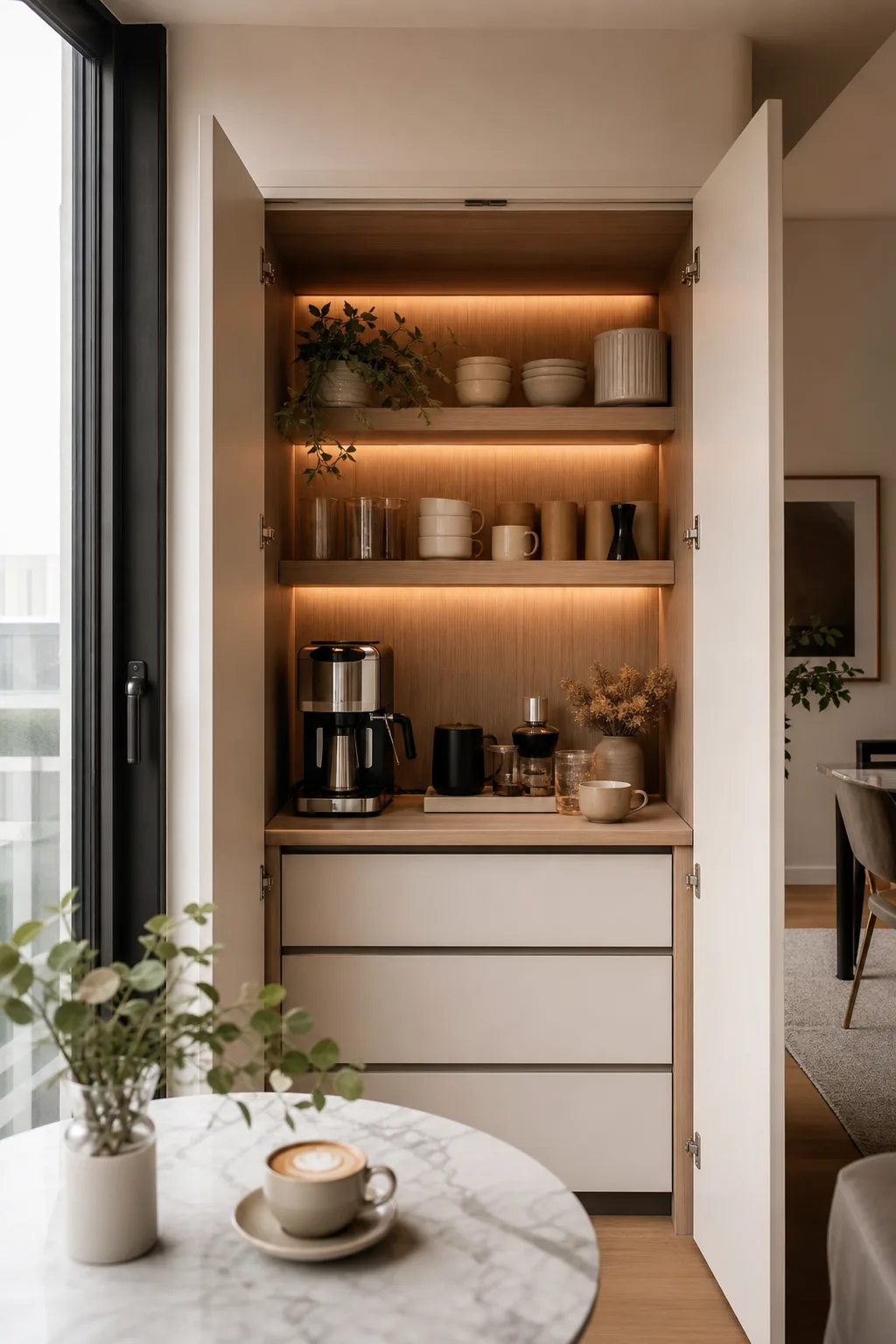
The safest hidden coffee station is usually a storage station that opens for brewing, not a powered appliance running behind closed doors. Choose the concealment method according to what happens inside: storing dry supplies is simple; filling water adds spill control; brewing or heating adds manufacturer clearances, heat, steam and direct outlet requirements.
Pick the hidden level first
| Hidden level | What goes inside | What happens before use | Best apartment fit |
|---|---|---|---|
| Door-front pantry | coffee, filters, mugs, scale | carry the brewer or supplies to the counter | smallest and lowest-risk |
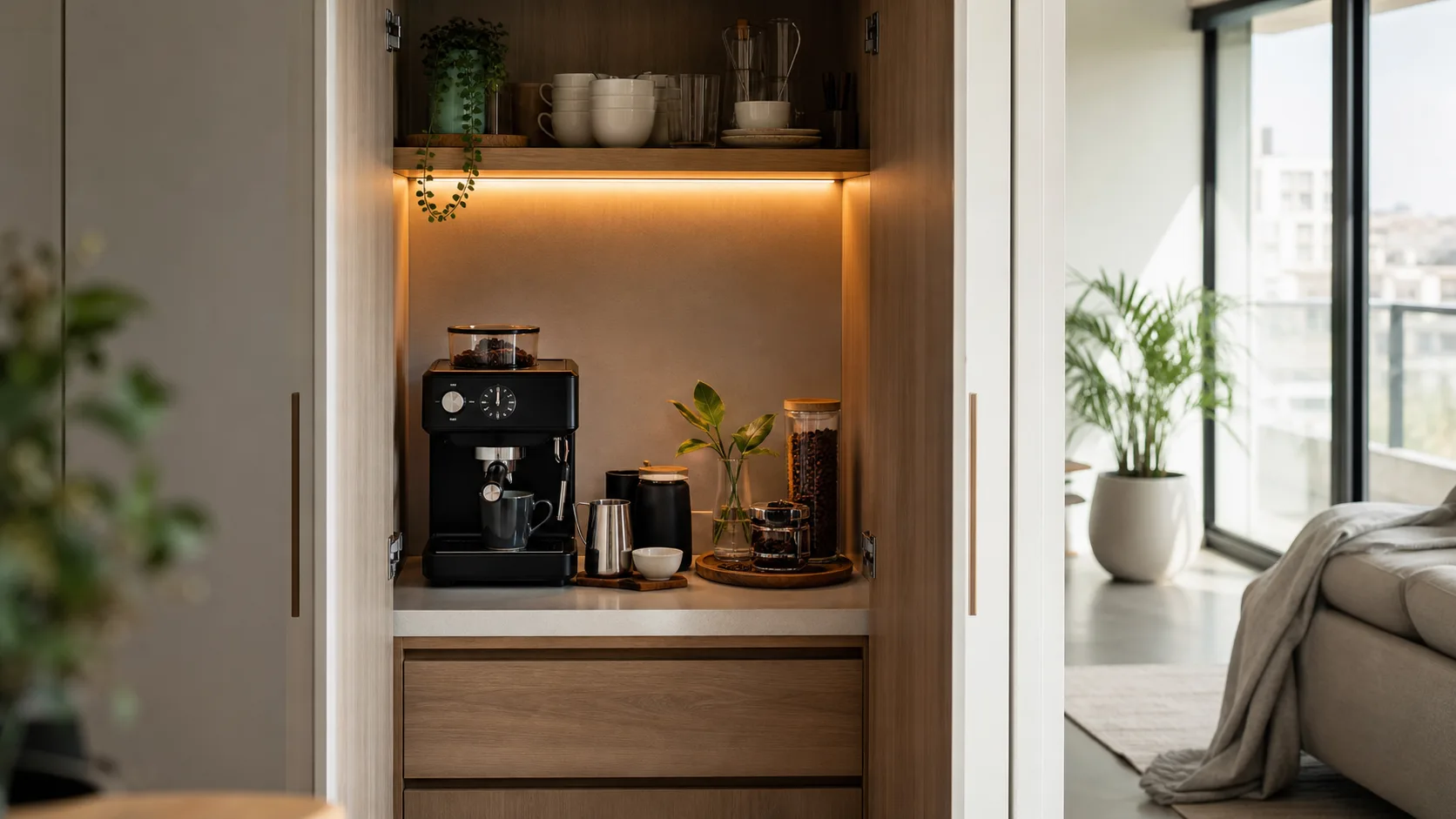
| Appliance garage | machine sits inside | open door fully and confirm manual permits operation there | built-in counter nook |
| Bar cabinet | full station behind doors | doors open; pull-out shelf only if rated and installed for appliance | dining area with permanent outlet |
| Rolling cart in closet | unplugged equipment and supplies | roll to a permanent outlet and stable work surface | renter who cannot alter cabinetry |
If the machine manual does not explicitly support operation in the enclosure, treat the cabinet as storage and brew on an open counter.
1. Convert one pantry shelf into a pull-out kit
Use a handled bin for filters, coffee, scoop, scale and cleaning brush. Store mugs beside it, not stacked high above the user’s head. The brewer remains on the kitchen counter or moves there before use.
This is the best hidden option when the apartment has no spare outlet in a cabinet. It conceals visual clutter without changing the electrical layout or trapping steam.
2. Use an appliance garage as an open-door station
An appliance garage can work when it was designed for counter appliances, the door retracts completely, and the machine manual’s top, rear and side clearances remain available. Measure with the water lid open and the portafilter or carafe moving—not just the appliance body.
Keep a waterproof, removable tray beneath the machine only if it stays level and does not block vents. Brew with the door fully open. Let heat and moisture dissipate, empty wet grounds and wipe condensation before closing.
3. Build a two-zone bar cabinet
Put the appliance on the upper work surface and dry supplies below. Do not store paper filters, napkins or alcohol beside a heat-producing appliance. A pull-out shelf must be intended for the appliance’s loaded weight and full operating movement; ordinary drawer slides are not automatically suitable.
If anchoring, cutting a cord opening or adding an outlet is required, get landlord approval and use qualified installation. Do not route a power cord through a pinched door gap or a hole with an unfinished sharp edge.
4. Hide a rolling cart in a closet
Choose a cart that holds unplugged equipment without overhanging the top. Keep the heaviest item low during movement, lock the wheels for loading and never roll hot liquid. At brew time, move the cart to a dry, level location beside a permanent wall outlet, then set up according to the appliance manual.
This option is reversible, but it fails if the closet route crosses a narrow walkway or the cart becomes general storage. Mark one shelf for coffee only and keep the travel path empty.
Plan the opening, not only the closed photo
Tape the proposed cabinet depth and door swing on the floor. Then rehearse:
- open the door without blocking the kitchen aisle;
- fill the reservoir without lifting a kettle over another appliance;
- install and remove the portafilter or carafe;
- place the cup on a stable landing area;
- discard grounds and carry wet parts to the sink;
- wipe the enclosure and leave it open until dry.
One failed movement can make a beautiful hidden station annoying enough to stop using.
Electrical rules for the decision
US Fire Administration guidance says a heat-producing appliance such as a coffee maker should be plugged directly into a wall outlet and that only one heat-producing appliance should use that outlet at a time. It also advises extension cords only as temporary devices and says to unplug small appliances when they are not in use. CPSC warns that noncompliant or damaged extension cords can create shock or fire hazards.
That means a cabinet without a suitable permanent outlet is storage, not a reason to create a concealed extension-cord installation. If the intended location needs new wiring, ask the property manager and a qualified electrician rather than modifying a rental cabinet yourself.
Moisture and reset test
After one real brew, inspect the cabinet roof, door, hinges and rear panel for condensation. Check that the cord and plug stay dry and cool, and follow the manufacturer’s cleaning and descaling schedule. If steam collects or the appliance cannot operate with every required clearance, move brewing to the open counter.
A hidden station succeeds when closing the door is the final step after cooling and cleanup—not a shortcut that hides a wet, hot machine.
Sources
Continue reading