Spaces
15 Coffee Bar Ideas for Small Apartments
A small-apartment coffee bar does not need its own room—or even its own cabinet.
A small-apartment coffee bar does not need its own room—or even its own cabinet. The most practical version borrows space from something you already have: an unused counter end, one drawer, a shallow bookcase, a cart or the inside of a cabinet that stays open while the appliance is running.
Before choosing an idea, measure three things: the equipment’s footprint, the extra space needed to fill the water tank or open the lid, and the path from the station to water and trash. Then choose one of the 15 layouts below based on what your apartment can give up.
Use the kitchen you already have
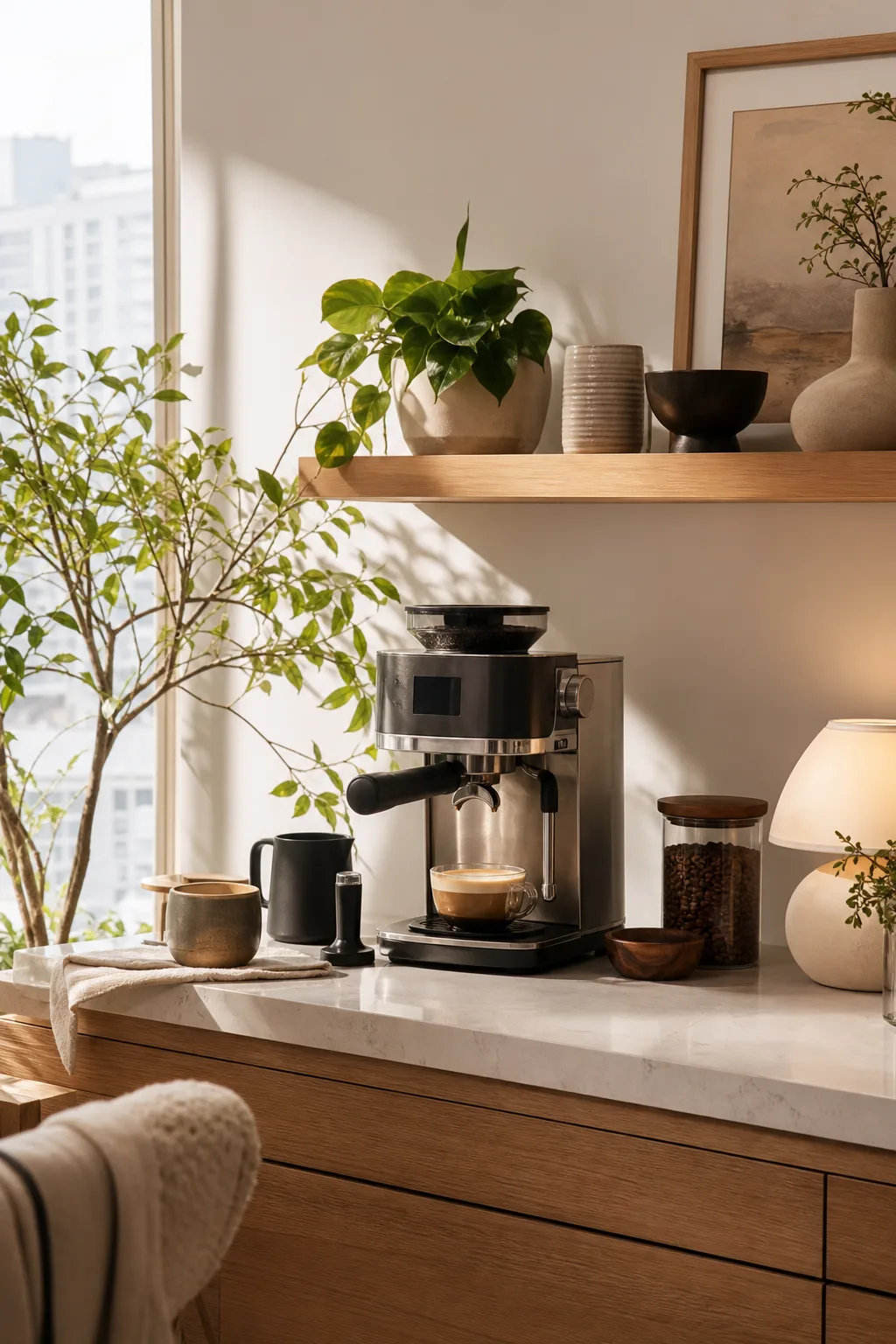
1. The counter-end station
Use the last section of counter beside a wall, not the middle of your main prep zone. Put the brewer and grinder on one wipeable tray; store filters or pods in the drawer immediately below.
Works best when: you brew every day and can spare one appliance-width of counter.
Trade-off: the station is always visible, so extra mugs and backup beans need another home.
2. The cabinet-and-counter split
Keep only the active brewer on the counter. Give the cabinet above it one shelf for coffee and filters, and the drawer below it one compartment for a scale, scoop and cleaning brush.
Works best when: your kitchen has storage but almost no open surface.
Setup cue: check that steam and heat will not be trapped under the cabinet, and follow the appliance manual.
3. The pull-out drawer kit
Turn a shallow drawer into a brew kit: scale, filters, scoop, thermometer and folded towel. The brewer stays on the counter, but the visual clutter disappears in one motion.
Works best when: tools—not machines—are making the counter look crowded.
Trade-off: wet tools must dry before the drawer closes.
4. The tray that moves at dinner
Group a manual brewer, coffee jar and filters on a tray that can move from the kitchen table to a shelf. Use the table for brewing, then return the dry kit after breakfast.
Works best when: you have no permanent counter space and use a manual brewer.
Trade-off: this is less convenient for a heavy espresso machine or an electric kettle with a separate base.
5. The sink-adjacent cleanup station
Place the brewer on the counter section nearest the sink, while keeping it outside the splash zone. Store a small grounds container and brush below.
Works best when: cleanup is the main reason equipment goes unused.
Setup cue: route the cord away from water and do not let it hang over the counter edge.
Use vertical or concealed space
6. One shelf above a manual-brew station
Install a shelf for mugs and dry supplies; keep all electrical equipment on the counter. A single shelf is often more useful than a decorative wall grid because it gives every item a stable base.
Works best when: the lease permits wall mounting and you can anchor the shelf correctly.
Trade-off: shelf load and wall material must be verified; do not place heavy machines overhead.
7. A narrow peg rail for light tools
Use a rail or removable hooks for light items such as a towel, brush or empty measuring spoon. Keep mugs, filled jars and appliances on supported surfaces.
Works best when: tiny tools are consuming drawer space.
Trade-off: adhesive products have specific surface and weight limits; they are not appliance supports.
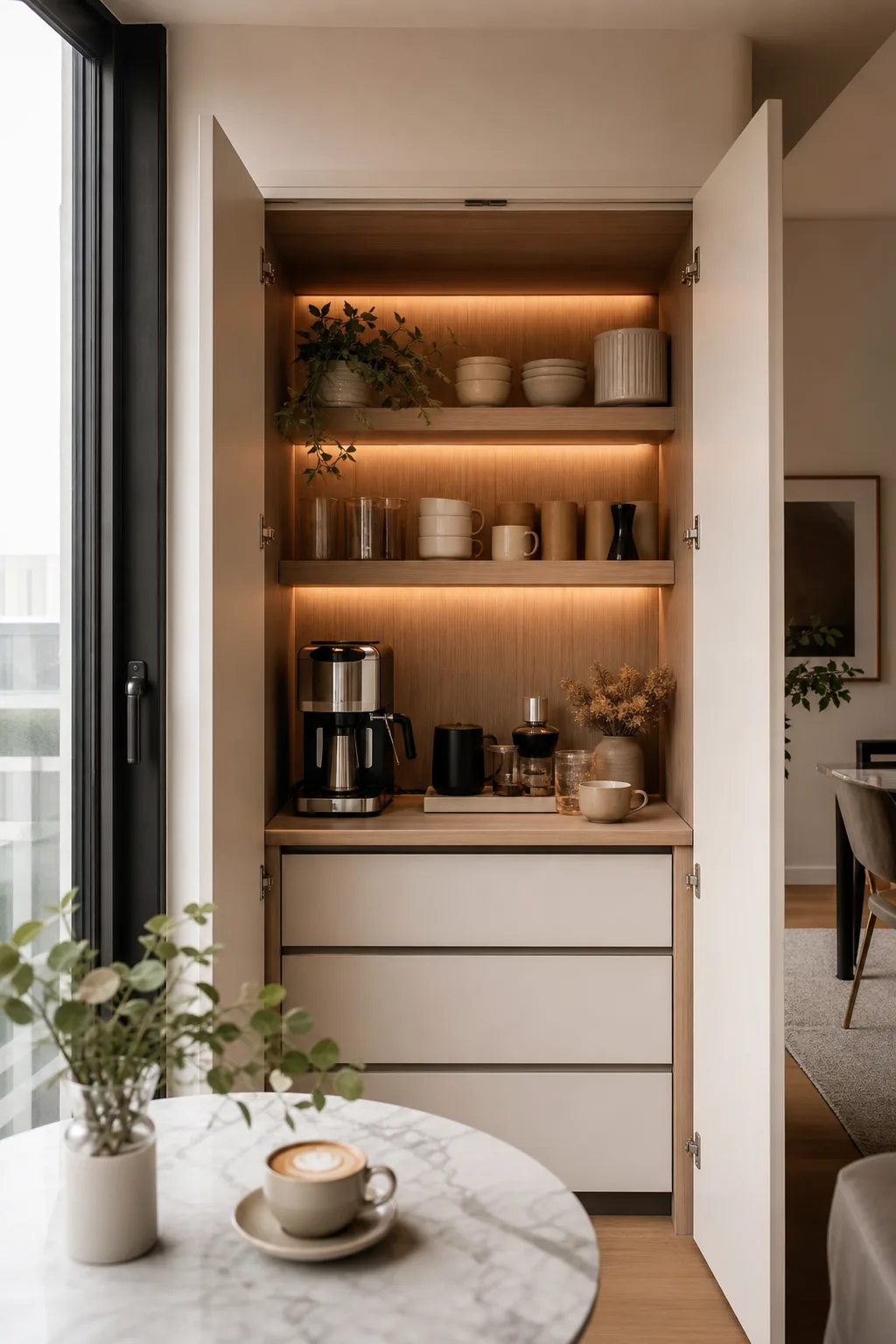
8. The open-cabinet coffee zone
Dedicate one cabinet to mugs, beans and a manual brewer. If an electrical appliance normally lives there, move it to an open counter before operating it unless its manual explicitly allows enclosed use.
Works best when: you want the station hidden between uses.
Safety boundary: some manufacturer manuals explicitly warn against operating espresso appliances in enclosed cupboards. Your appliance’s instructions control.
9. The pantry-door supply rack
Use a properly installed door rack for filters, unopened coffee bags and lightweight supplies. Keep breakable cups and liquids off a rack that swings.
Works best when: you have a pantry door but shallow shelves.
Trade-off: added weight can affect the door; follow the rack and door hardware limits.
Add one compact piece of furniture
10. The shallow bookcase station
Choose a sturdy, shallow bookcase with a top large enough for the brewer’s entire base. Put heavy equipment and water low; use upper shelves for cups and paper goods.
Works best when: you have an empty wall but no kitchen storage.
Safety boundary: secure top-heavy furniture according to its instructions, especially where children live or visit.
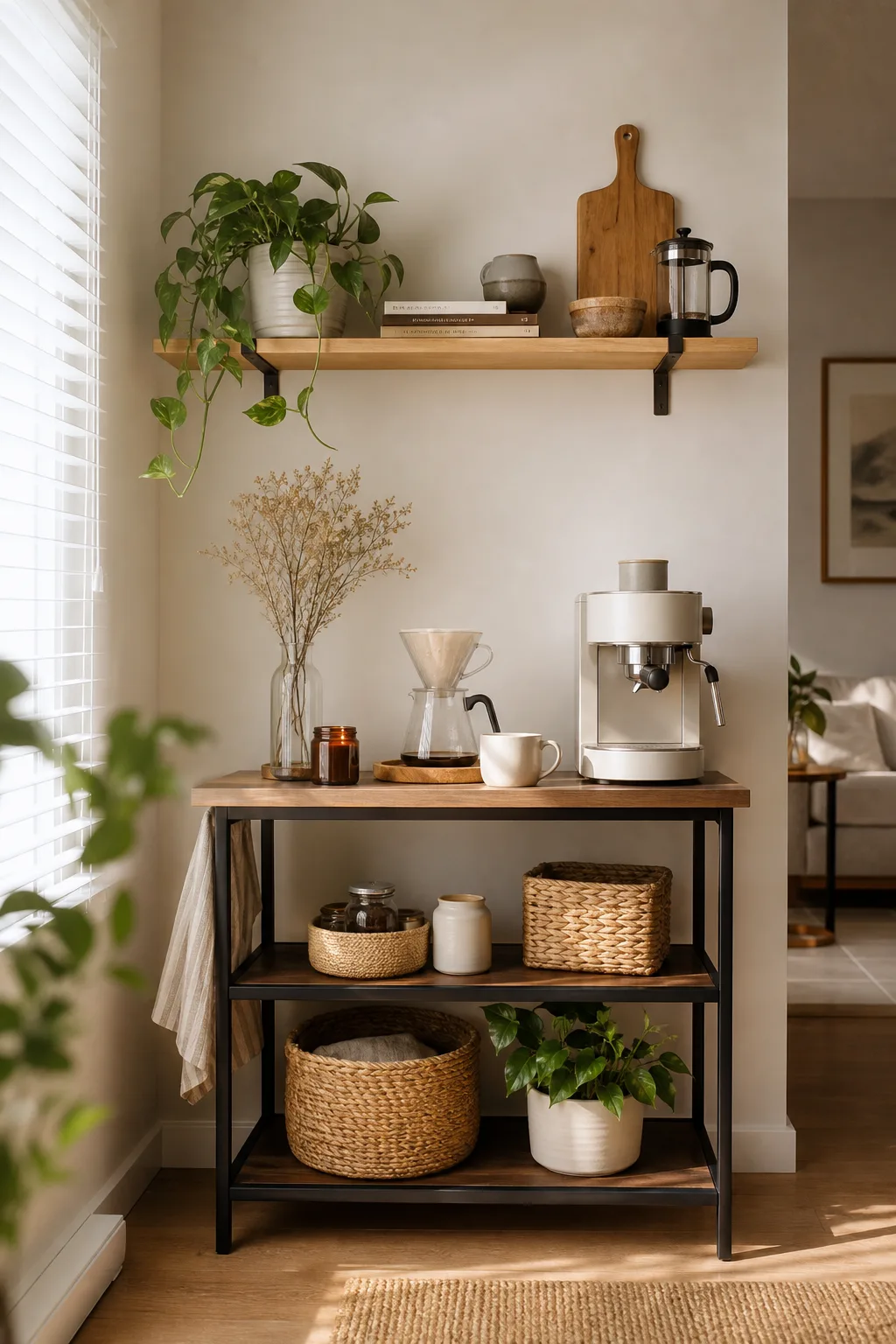
11. The two-shelf console
Use the top for brewing, the first shelf for daily mugs and beans, and the bottom shelf for backup supplies. Open sides make it easier to see cords and wipe spills than a deep closed cabinet.
Works best when: you want the station to feel like furniture rather than kitchen equipment.
Trade-off: verify the top’s load rating and protect surfaces from heat and water as directed by the furniture and appliance makers.
12. The microwave-cart conversion
A compact microwave cart can provide an appliance-size top, lower storage and sometimes a built-in cable opening. Remove any shelf that blocks the brewer’s lid or water tank, and follow the cart maker’s surface and load instructions.
Works best when: you need a freestanding appliance surface.
Trade-off: “microwave cart” is not a universal capacity rating; check the exact model.
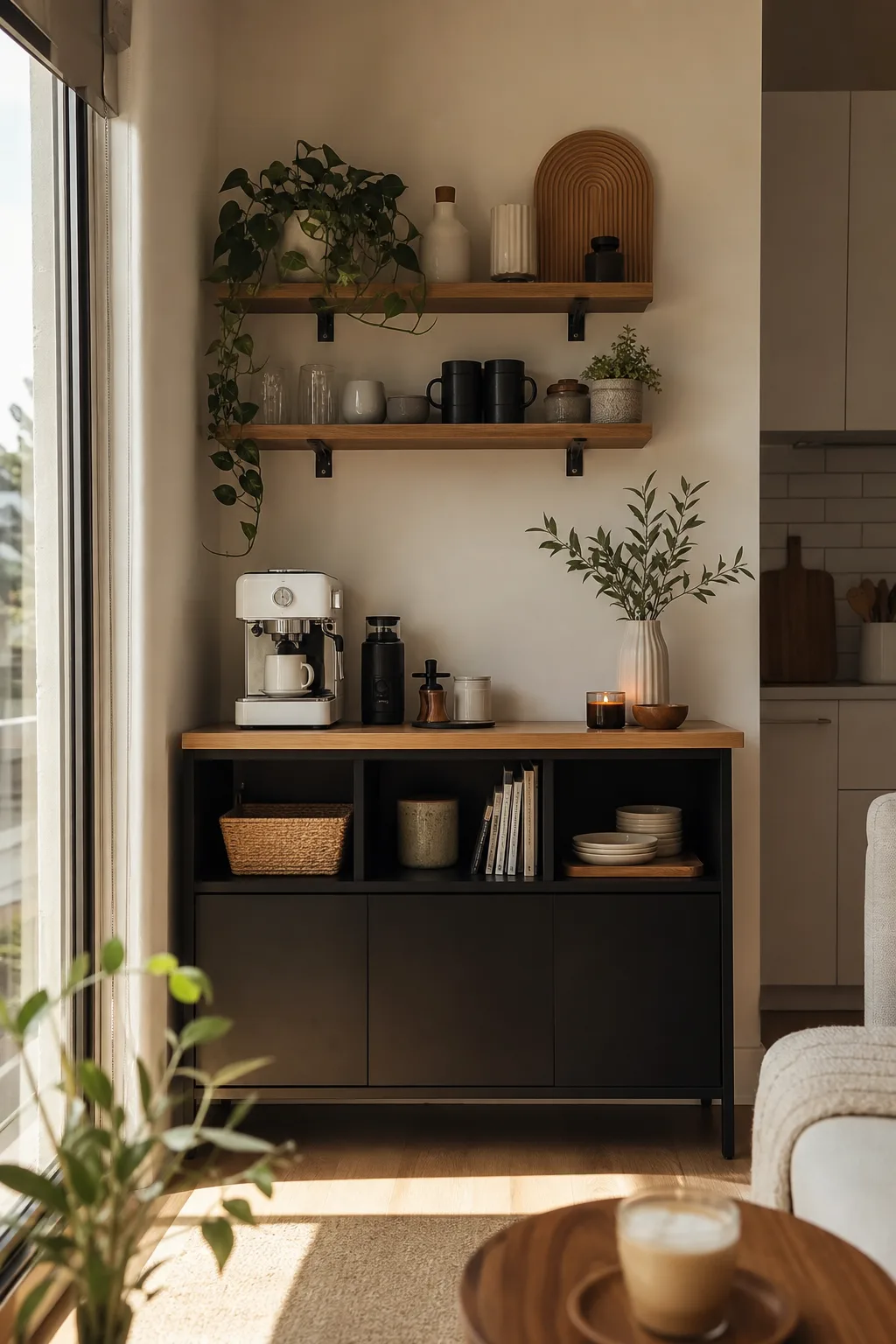
13. The sideboard with a closed supply cabinet
Keep the machine and grinder on top, then hide bulk coffee, cleaning tablets and spare cups behind doors. Divide one shelf into “daily” and “refill” zones so supplies do not migrate onto the surface.
Works best when: the coffee bar shares a living or dining room.
Trade-off: a deep sideboard consumes more floor area than a cart or bookcase.
Keep the station mobile or temporary
14. The lockable coffee cart
Use a cart with a top large enough for the appliance base and casters that lock. Store the heaviest items on the lowest shelf and move the cart only when the kettle and machine are cool, empty and unplugged.
Works best when: the station must move between the kitchen and dining area.
Trade-off: a cart is storage, not a substitute for a nearby safe outlet.
15. The weekend coffee box
Pack a manual brewer, filters, scale and sealed coffee container in one lidded box. Bring it out for slow weekend coffee and store it with other occasional kitchen tools.
Works best when: you drink café-style coffee occasionally and value an empty weekday counter.
Trade-off: the kit must be completely dry before storage.
Pick the right idea quickly
| Your constraint | Start with |
|---|---|
| No free floor area | Counter-end, drawer kit or cabinet-and-counter split |
| No permanent counter area | Movable tray or weekend coffee box |
| Empty wall outside the kitchen | Shallow bookcase, console or sideboard |
| Need to hide everything | Open-cabinet zone or sideboard |
| Need renter-friendly mobility | Lockable cart or movable tray |
| Cleanup is the bottleneck | Sink-adjacent station |
Run three safety checks before styling
First, solve power. The Electrical Safety Foundation International advises that extension cords should not replace permanent wiring, must be rated for the appliance and should not be used for more than one appliance. Do not build a coffee bar around chained power strips or a cord hidden under a rug. If the only workable location depends on a permanent extension cord, choose another location or ask a qualified electrician or your property manager about an appropriate outlet.
Second, check stability. The U.S. Consumer Product Safety Commission’s Anchor It guidance recommends sturdy furniture, securing top-heavy pieces according to manufacturer instructions and storing heavier items low. For renters, confirm the lease and wall construction before anchoring; mobility does not make an unstable cart or shelf safe.
Third, operate appliances in the conditions their manuals require. Do not assume a cabinet is safe because the machine fits inside it. Check operating clearance, ventilation, lid movement, water access and cord routing with the actual appliance in hand.
The strongest small-apartment coffee bar is the one that removes a daily obstacle. If filling the tank is awkward, prioritize clearance. If cleanup stops you from brewing, move closer to the sink. If visual clutter is the problem, contain tools in one drawer before buying more furniture.
Continue reading