Spaces
Coffee Bar Cart Ideas
A useful coffee bar cart is not just a counter on wheels. It needs a stable parking place, a top that fits your brewer in its working position, and shelves arranged around the way you make coffee.
A useful coffee bar cart is not just a counter on wheels. It needs a stable parking place, a top that fits your brewer in its working position, and shelves arranged around the way you make coffee. For most apartments, the best plan is to park the cart beside a wall outlet and move it only for cleaning or serving—not roll a hot, plugged-in appliance across the room.
Measure the working footprint first
Mark the cart’s proposed outline on the floor with painter’s tape. Check the aisle with cabinet and dishwasher doors open. Then measure your tallest appliance twice: once closed and once with its water-tank lid, bean hopper or brewer lid open. Add the space needed to remove the portafilter, refill water and place a cup under the brewer.
Write down five limits before shopping:
- maximum cart width, depth and height;
- appliance footprint and open-lid height;
- the cart maker’s total and per-shelf load limits;
- distance to a usable wall outlet;
- the route to the sink, including thresholds or rugs.
The cart passes only if the appliance fits during use, the loaded weight stays within the manufacturer’s ratings, and wheels can lock or the cart can otherwise remain stationary. If any one of those is unknown, keep looking.
Choose one of three cart layouts
The brew-and-park cart
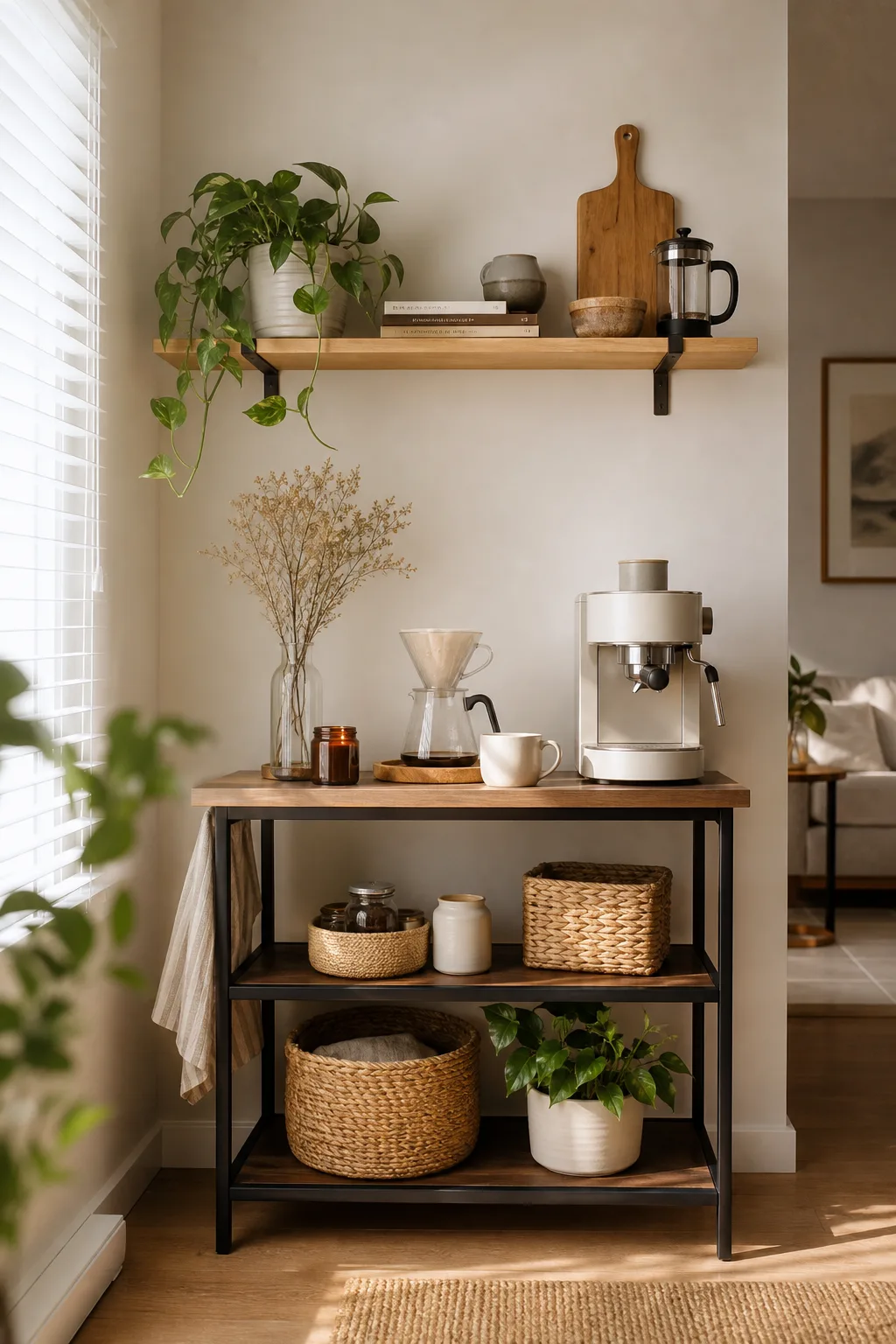
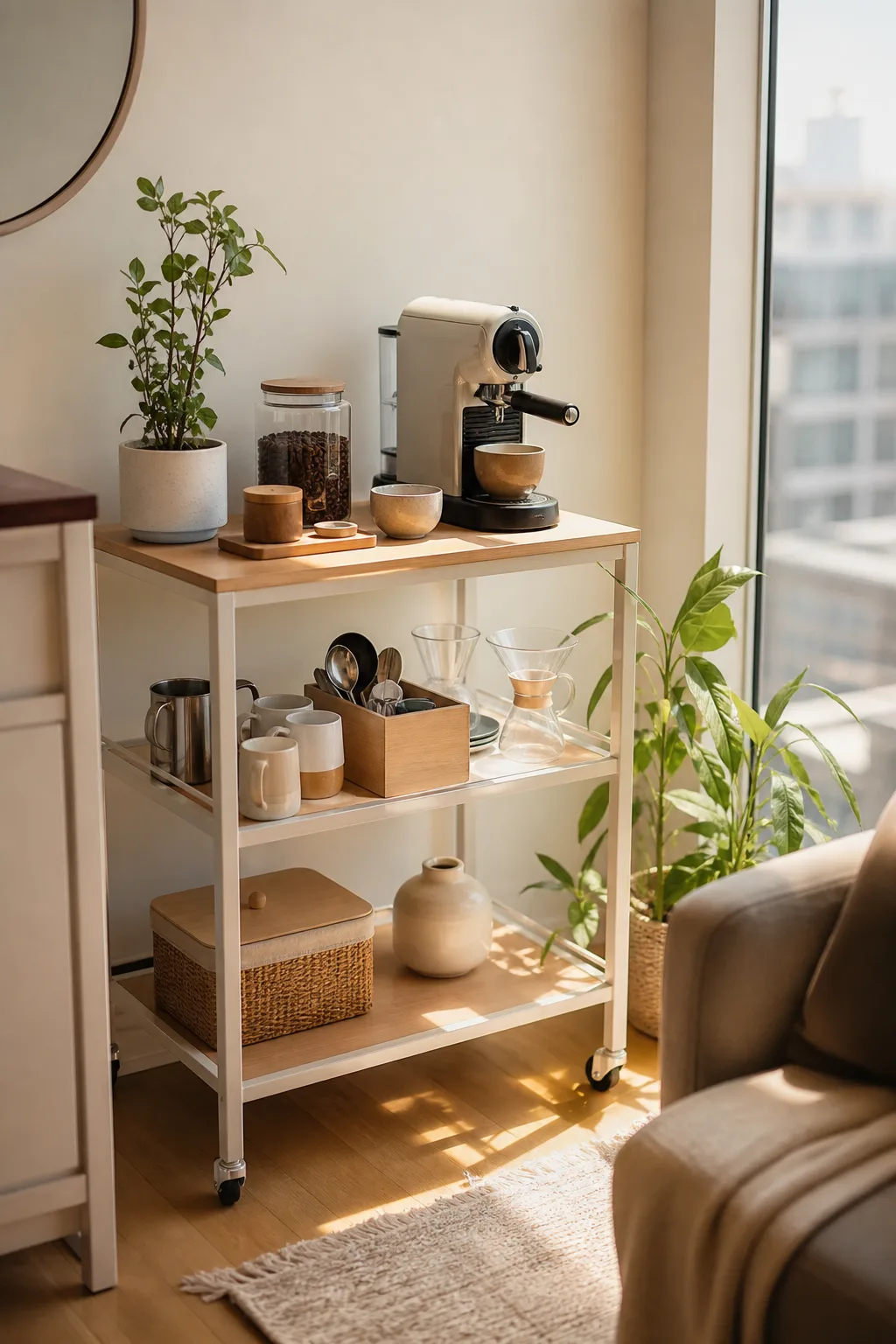
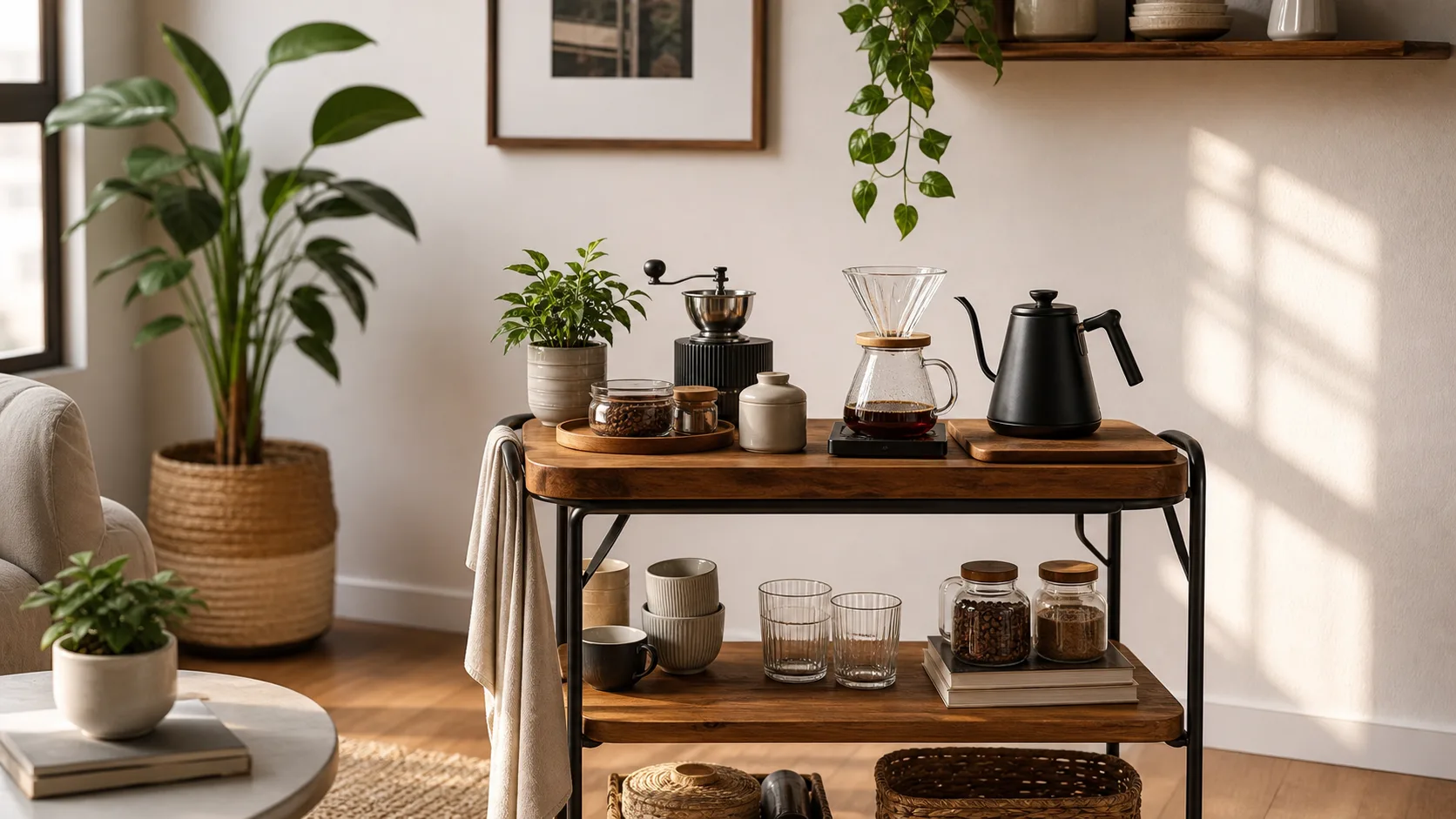
Put the brewer and grinder on top, daily cups on the middle shelf, and filters or unopened beans below. This is the simplest arrangement when the cart can live beside a wall outlet. Keep the appliance cords relaxed and off the wheels. Leave the cart parked while anything is plugged in, hot or filled with water.
The prep cart
Use the top for a scale, hand grinder and pour-over setup, then carry the kettle to the cart only when needed. This works when the convenient outlet is on the kitchen counter but counter storage is scarce. Store the empty kettle below after it cools; do not treat the cart as permission to stretch a cord across an aisle.
The serving cart
Keep powered brewing on the fixed counter and use the cart for mugs, carafes, napkins and a tray. It is the better choice when guests need access or when the only parking place is away from an outlet. Because no hot appliance has to travel, the cart can move between the kitchen and living area after drinks are prepared.
Give each shelf one job
The top is the work zone: brewer, scale and one landing spot for a wet spoon or dripper. Use a rimmed, wipeable tray if the cart surface is vulnerable to water. The middle shelf is the daily-access zone for mugs, filters and beans. The bottom is the ballast and backup zone; place heavier, non-breakable supplies low, without exceeding the stated shelf limit.
Avoid filling every edge. A clear patch at least as large as your mug or carafe gives you somewhere to set things down. Closed bins are useful for back stock, but label them so the lower shelves do not become a duplicate pantry.
Make a rental-friendly parking bay
A narrow wall section can feel intentional with a small washable mat under the cart and one lightweight artwork above it. Use freestanding organizers when your lease limits drilling. If children might climb or pull on the cart, a mobile coffee station with hot liquids is a poor fit; choose a secured cabinet or fixed counter instead. CPSC warns that children can be injured when they climb on or pull against furniture.
Electrical placement matters more than styling. The U.S. Fire Administration advises plugging a heat-producing appliance such as a coffee maker directly into a wall outlet, one heat-producing appliance at a time, and using extension cords only temporarily. Do not overload the outlet or power strip, and retire equipment with a damaged or loose cord.
Use a 60-second reset
After brewing, discard grounds, wipe the top, return cups and filters to their shelf, empty standing water as the appliance manual directs, and unlock the wheels only after hot items are removed and appliances are unplugged. Once a week, check that casters, handles and shelves remain tight. If the cart rocks, rolls under normal brewing pressure or blocks the aisle, stop using it as a brew surface until the problem is corrected.
Sources
Continue reading