Equipment
Espresso Setup Checklist for Small Kitchens
Use this checklist before buying or installing an espresso setup in a small kitchen.
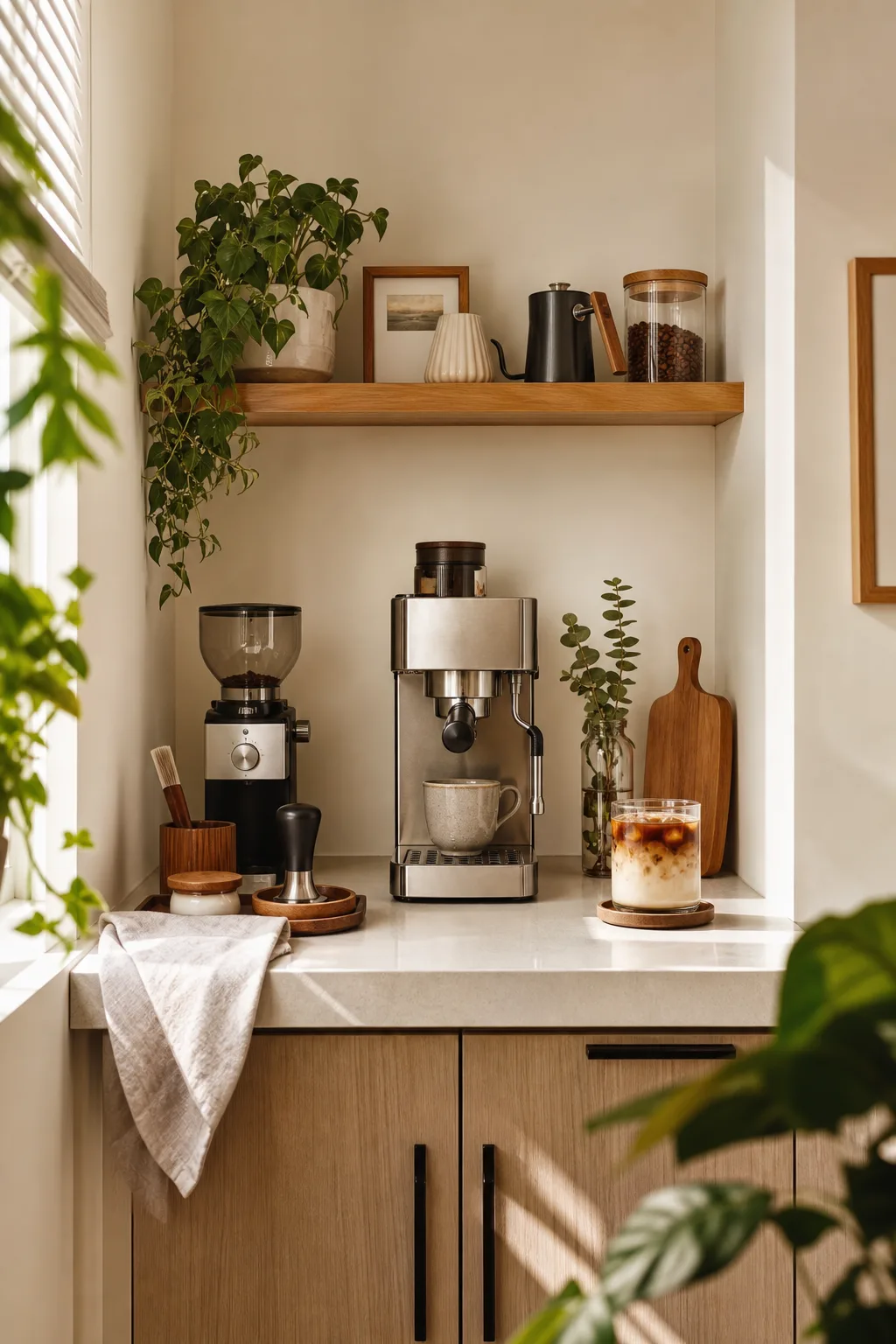
Use this checklist before buying or installing an espresso setup in a small kitchen. A setup passes when every tool fits in its operating position, the coffee maker reaches a suitable wall outlet without an extension cord, and the daily workflow leaves a safe place for hot parts and milk cleanup.
Before you buy: prove the setup fits
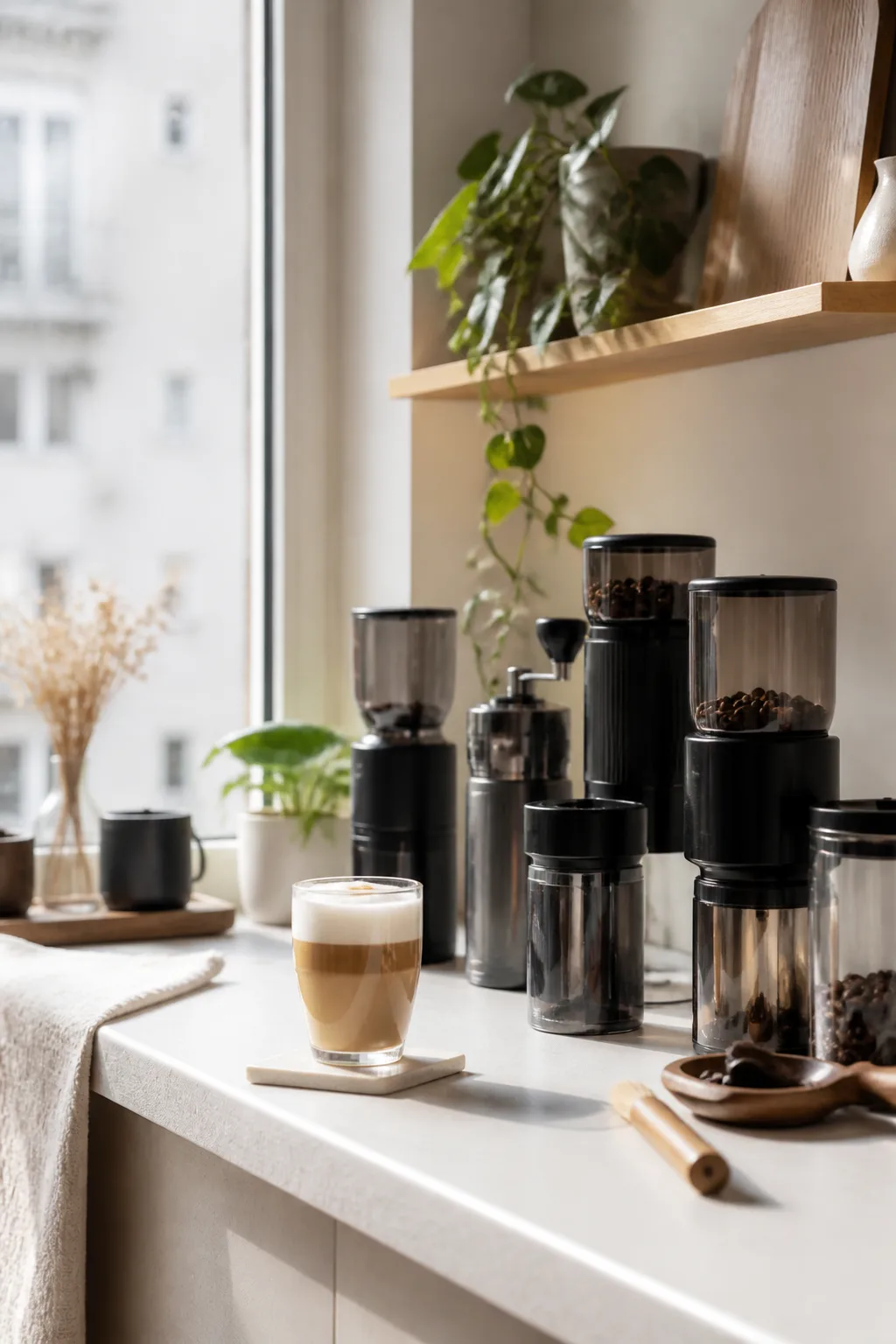
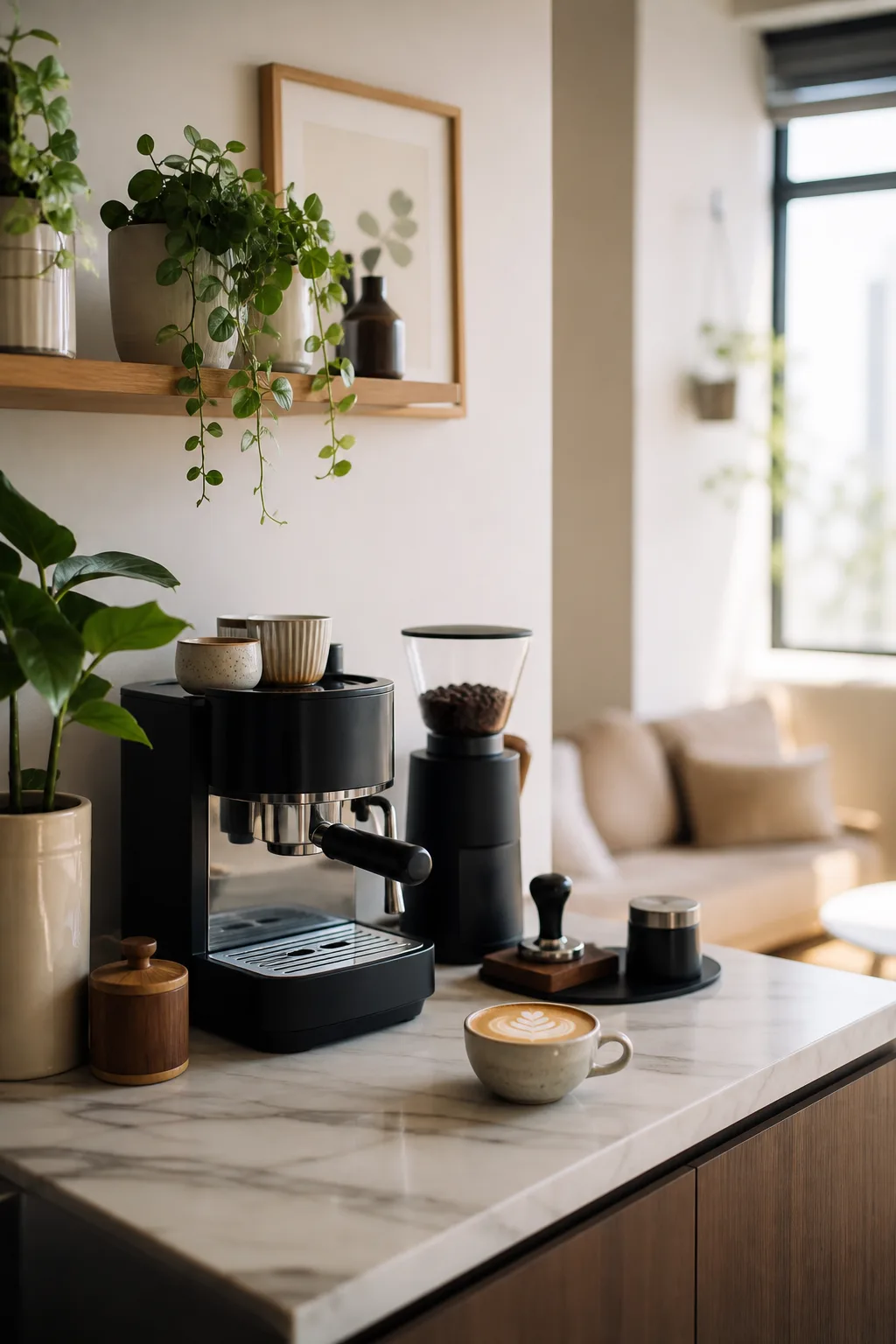
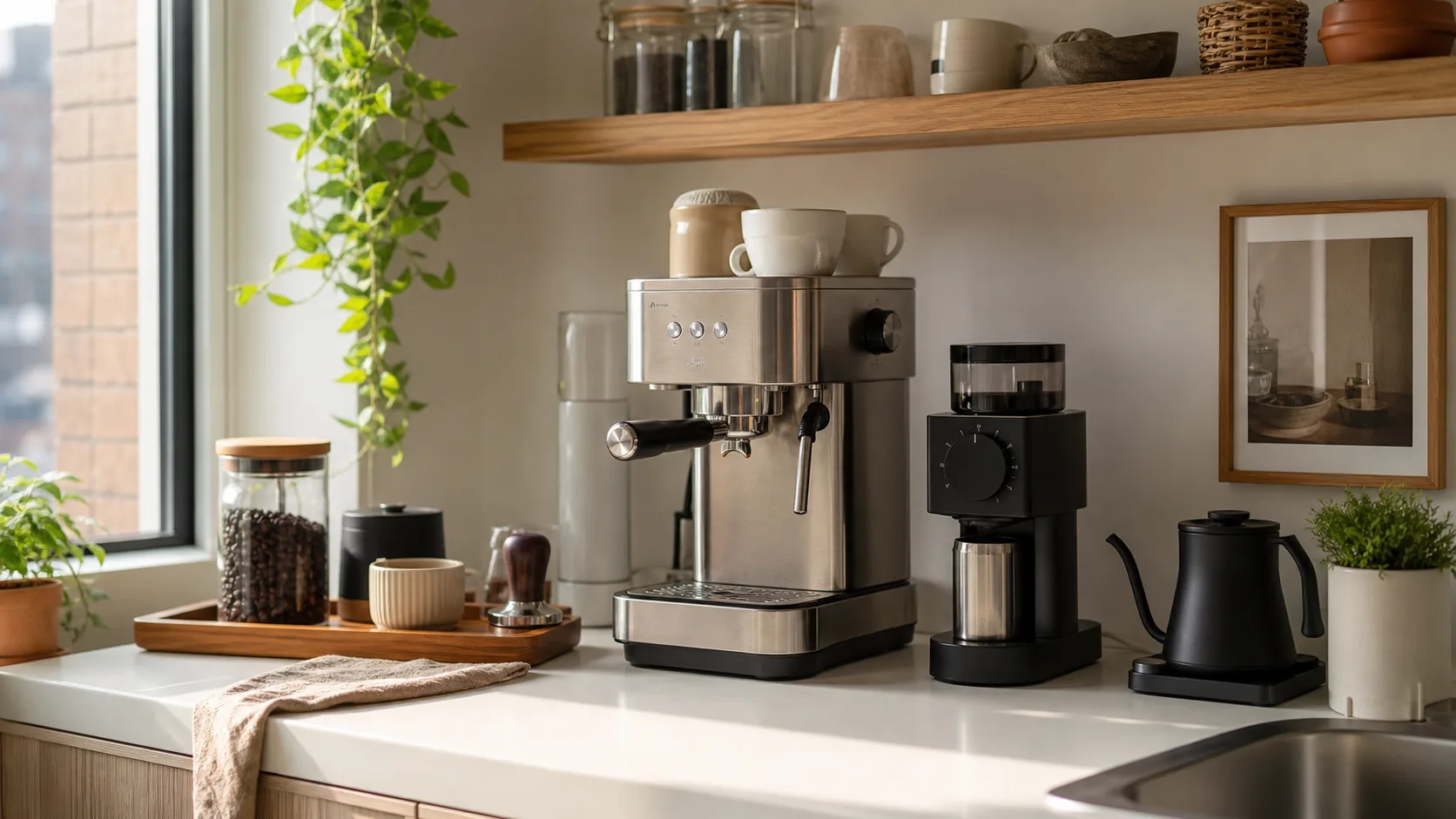
- Tape out the total footprint. Mark the machine, grinder and tamping area on the counter. Include the grinder rather than measuring the espresso machine alone.
- Measure operating clearance. Record appliance height with water-tank and bean-hopper lids open. Confirm that the portafilter can rotate out without striking a wall or neighboring appliance.
- Protect one landing zone. Reserve enough bare counter for a milk pitcher, cup and hot portafilter. If those items would land on the stove or sink edge, the plan fails.
- Check the outlet. The U.S. Fire Administration says a heat-producing appliance such as a coffee maker should plug directly into a wall outlet, one heat-producing appliance at a time. If the cord cannot reach without crossing the sink, stove or walkway, choose another location.
- Read the exact manuals. Confirm voltage, wattage, ventilation, water, cleaning and cord instructions for the actual models. Product photographs cannot answer those questions.
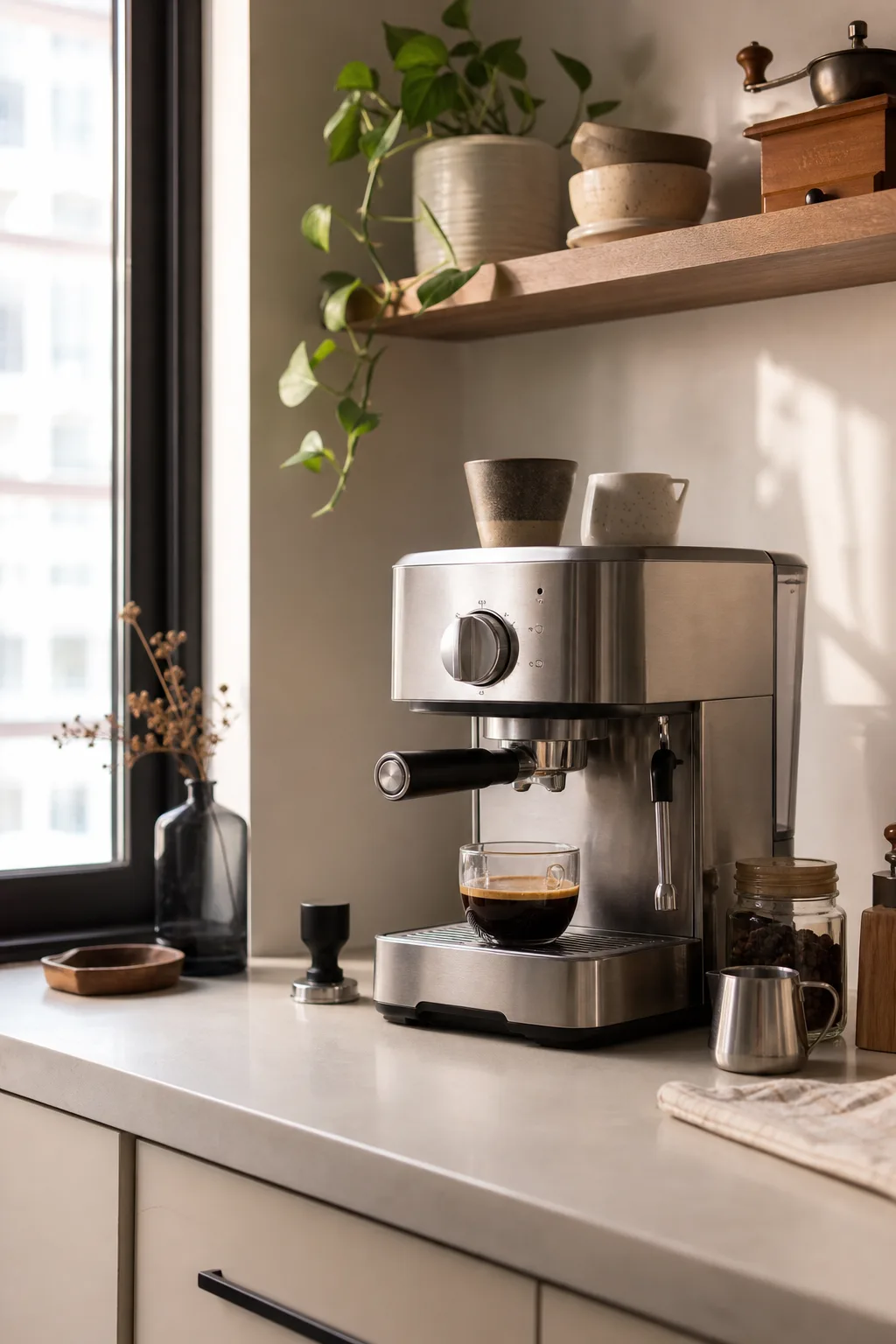
As a scale reference, Breville lists the U.S. Bambino at 11.9 × 6.1 × 13.5 inches (width × depth × height). Those dimensions show why “compact” is not the same as “fits”: the machine still needs room for its tank, steam wand, portafilter and cup. Measure your own model and kitchen.
Buy the working core, not the accessory pile
- Espresso machine with its supplied portafilter and baskets
- Espresso-capable burr grinder, unless you intentionally use pre-ground coffee with a basket designed for it
- Tamper that fits the supplied basket
- Small digital scale that fits under the cup or beside the machine
- Milk pitcher only if you make steamed-milk drinks
- Clean towel plus the cleaning tools and products named in the machine manual
A knock box, dosing funnel and tamping mat are optional on day one. Add one only when it solves a repeated spill, noise or cleanup problem. A dish or small lidded container can collect a puck temporarily if it stays out of food-prep space and is emptied promptly.
Before first use
- Wash removable food-contact parts as the manufacturer directs.
- Fill the tank with potable water to the marked limit and seat it fully.
- Install the drip tray and any filter specified by the manual.
- Run the manufacturer’s first-use rinse or priming cycle with a container large enough to catch the discharge.
- Test the workflow once without coffee: tank to machine, cup to tray, portafilter to waste, pitcher to sink.
For example, the Bambino manual calls for a first-use cycle to rinse the machine and prime its heating system, with the water tank and drip tray correctly seated. This example explains the kind of step to find; your own manual controls.
Before every session
- The cart or counter is dry and stable.
- The cord, plug and outlet show no damage or looseness.
- The water tank and drip tray are seated.
- The steam wand can swing without hitting a wall.
- No towel, paper bag or package rests against a hot appliance.
Stop if the plug or outlet becomes hot, sparks, smells scorched or fits loosely. Unplug the setup and have the outlet or appliance evaluated rather than trying another power strip.
After milk and at the end of the day
Wipe and purge the steam wand immediately, following its manual, so milk does not dry on the tip. Empty the drip tray before it can spill, discard the puck, brush loose grounds away and wipe the counter. Do not spray cleaner into the grinder or espresso machine.
At the interval stated by each manufacturer, clean the grinder and run the espresso machine’s cleaning or descaling procedure. Baratza’s Encore ESP support hub, for example, separates first-time setup from cleaning guidance; use the instructions for your exact grinder rather than applying an espresso-machine cleaner to it.
The setup is working if you can refill, grind, brew, steam and reset without moving a plugged-in machine or borrowing food-prep space. If the routine repeatedly blocks the sink or stove, remove the least-used accessory or move the whole station—the answer is not a taller pile.
Sources
Continue reading