
Equipment
Best Espresso Machine for Beginners
For a beginner who wants to learn manual espresso and milk steaming in a small US apartment, the Breville Bambino is the best overall starting point in this comparison.
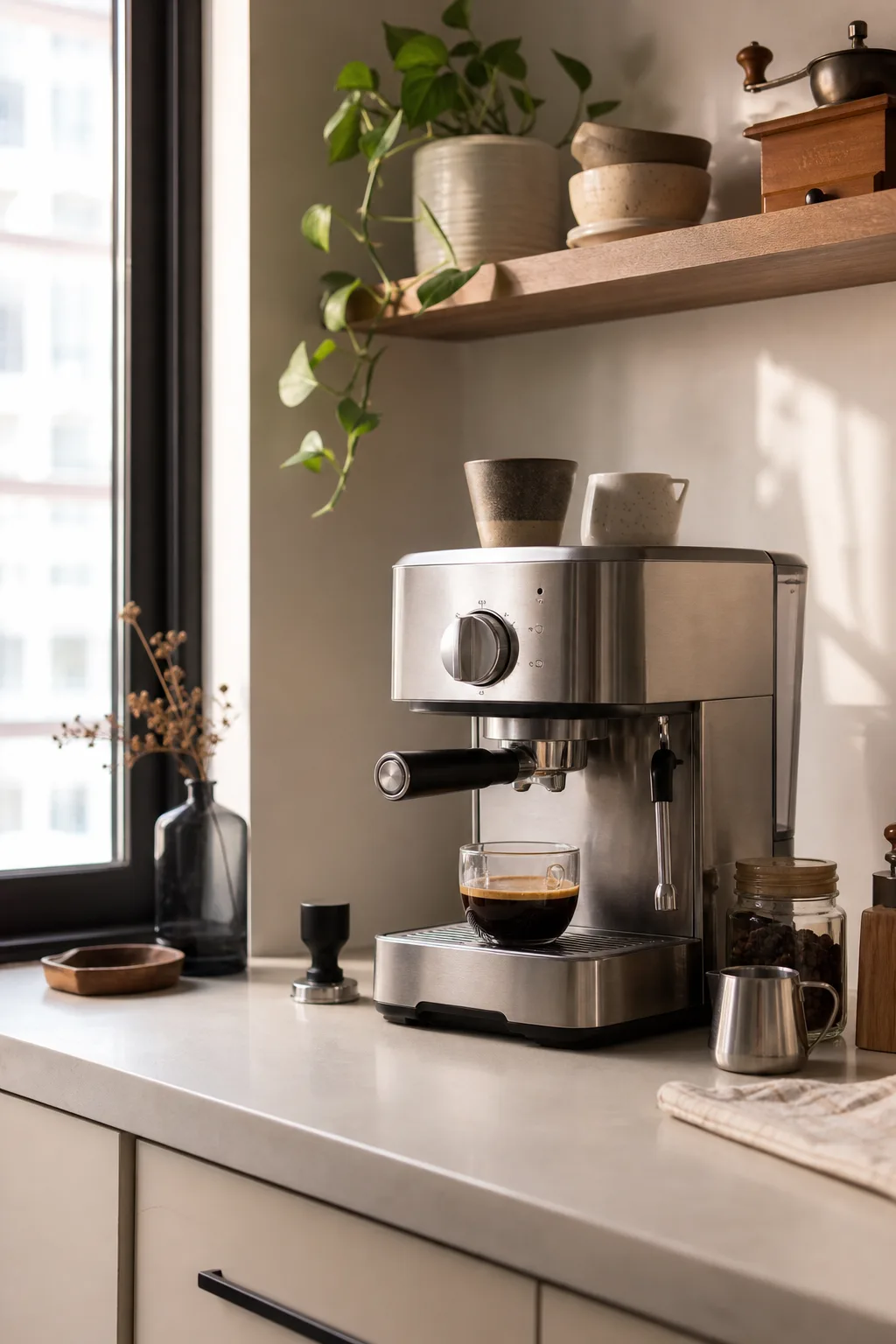
For a beginner who wants to learn manual espresso and milk steaming in a small US apartment, the Breville Bambino is the best overall starting point in this comparison. It has a narrow 6.25-inch width, includes both single-wall and dual-wall filter baskets, and uses simple one- and two-shot controls. Breville listed it at $299.95 when checked September 3, 2026.
If the machine budget must stay near $150, the De’Longhi Stilosa is the budget choice. De’Longhi listed it at $149.95. It is wider, slower in workflow, and more manual, but it includes two filter baskets and a steam wand.
These recommendations are based on published specifications, included accessories, beginner workflow, footprint, and price—not hands-on testing.
Quick comparison
| Machine | Best for | US price checked | Width | Water tank | Portafilter/baskets | Milk system |
|---|---|---|---|---|---|---|
| Breville Bambino BES450 | Most beginners who want a compact learning machine | $299.95 | 6.25 in | 47 fl oz | 54 mm; single- and dual-wall baskets included | Manual steam wand |
| De’Longhi Stilosa EC260BK | Lowest machine cost in this shortlist | $149.95 | 8.07 in | 33.8 oz | Two baskets; ESE pod compatibility listed | Manual milk frother |
Prices exclude tax, shipping, grinder, beans, and maintenance supplies. Recheck the official pages before buying.
Why the Bambino is the better beginner fit
It supports an easier first week
Dual-wall baskets are forgiving when coffee is pre-ground or the grinder is not yet dialed in. Single-wall baskets give the learner a path toward controlling grind and dose later. Because Breville includes both types, the machine can meet the beginner at two different stages without an immediate basket purchase.
The button interface separates one shot, two shots, hot water, and steam. Breville states that its ThermoJet system reaches operating temperature in three seconds. Treat that as manufacturer performance information, not independent timing from this article.
It is narrow without being a capsule system
At 6.25 inches wide and 13.5 inches deep, the Bambino uses less counter width than the 8.07-inch Stilosa. Depth is the same on the published spec sheets. You still need extra working room in front for the portafilter and above or behind for water access; measure the full routine before ordering.
The included kit is more complete
Breville lists a milk jug, tamper, portafilter, four baskets, steam-wand cleaning tool, and descaling powder with the Bambino. That does not eliminate the need for a grinder, scale, beans, and future maintenance supplies, but it reduces the number of small items needed on opening day.
When the Stilosa is the smarter purchase
Choose the Stilosa when $150 is a firm machine ceiling and you are comfortable with a more hands-on workflow. De’Longhi publishes an 8.07-by-13.5-by-11.22-inch footprint, a removable 33.8-ounce water tank, two filter baskets, a manual frother, and compatibility with ESE pods.
The lower machine price leaves more of the total budget for the grinder. That matters because a manual espresso machine cannot correct coffee ground at the wrong size. If buying the Bambino would force you to skip a suitable grinder entirely, a less expensive machine plus a capable grinder can be the more coherent setup.
The Stilosa is not the pick for someone who wants automatic milk texturing or a one-touch drink. Both machines here require the user to dose coffee, lock in a portafilter, start the shot, steam milk manually, knock out the puck, and clean the working parts.
The purchase decision in four questions
1. Will you buy a grinder?
For the most control, budget for an espresso-capable burr grinder. If you must begin with pre-ground coffee, the Bambino’s included dual-wall baskets provide a clearer transition path. With either machine, buy beans in small quantities and expect to adjust the recipe rather than relying on one universal setting.
2. Do you actually want manual milk steaming?
The steam wand is a learning task, not a decorative feature. You will need to purge and wipe it after use and practice positioning the pitcher. If that sounds like unwanted work, a capsule machine or separate automatic frother may fit better, even though it serves a different coffee experience.
3. Does the machine fit when operating?
Mark the published base dimensions on the counter, then add room for:
- inserting and rotating the portafilter handle;
- removing and filling the tank;
- placing the milk pitcher beside the machine;
- opening nearby cabinet doors;
- wiping spills without moving a hot appliance.
Width alone does not determine apartment fit. A narrow machine can still be awkward beneath a low cabinet.
4. Can your routine absorb cleanup?
After each session, expect to empty the basket, rinse removable coffee-contact parts, wipe and purge the steam wand, and clear the drip tray as needed. Follow the manufacturer manual for cleaning and descaling intervals. If the cleanup has no place in the morning, the machine will not become easier because it was labeled beginner-friendly.
The real starter budget
The machine price is only the first line. Plan for:
- an espresso-capable grinder, unless using pre-ground coffee initially;
- a small scale that reads in grams;
- beans and milk;
- a knock container or another safe place for spent grounds;
- cleaning and descaling supplies specified by the manufacturer;
- replacement water filters if the chosen machine uses them.
Do not spend the remaining budget first on distribution tools, a bottomless portafilter, decorative canisters, or multiple pitchers. Learn the stock basket, one dose, and one milk drink before adding accessories.
A seven-day beginner plan
Days 1–2: Use the included instructions, confirm every part is seated correctly, and make straight espresso without changing multiple variables.
Days 3–4: Adjust one variable—grind size if you own a grinder, or dose if using compatible pre-ground coffee. Record what changed.
Days 5–6: Add milk steaming. Focus on a consistent amount of milk and immediate wand cleanup before attempting latte art.
Day 7: Decide what caused the most friction: grinding, dosing, locking the portafilter, steaming, or cleanup. Buy no accessory unless it solves that observed problem.
Final recommendation
Buy the Breville Bambino if you can fund the machine and still leave room for a grinder. Its narrow footprint, dual- and single-wall baskets, simple controls, and fuller included kit make it the strongest beginner package of these two.
Buy the De’Longhi Stilosa when upfront machine cost is the controlling constraint. Accept the more basic workflow and direct the savings toward the grinder and coffee rather than a shelf of accessories.
Neither choice makes espresso automatic. The best beginner machine is the one whose entire routine—grinding, brewing, steaming, and cleaning—fits both the counter and the morning.
Sources and price date
Specifications and prices checked September 3, 2026.
Continue reading
Related stories
equipment
Best Milk Frother Under $50
equipment
Budget Espresso Accessories That Matter
equipment