
Equipment
10 Coffee Grinders Compared for Small Apartments
For a small apartment, the grinder decision starts with workflow: choose a manual grinder if drawer storage and quiet-by-design operation matter most; choose an espresso-capable electric grinder if you pull…
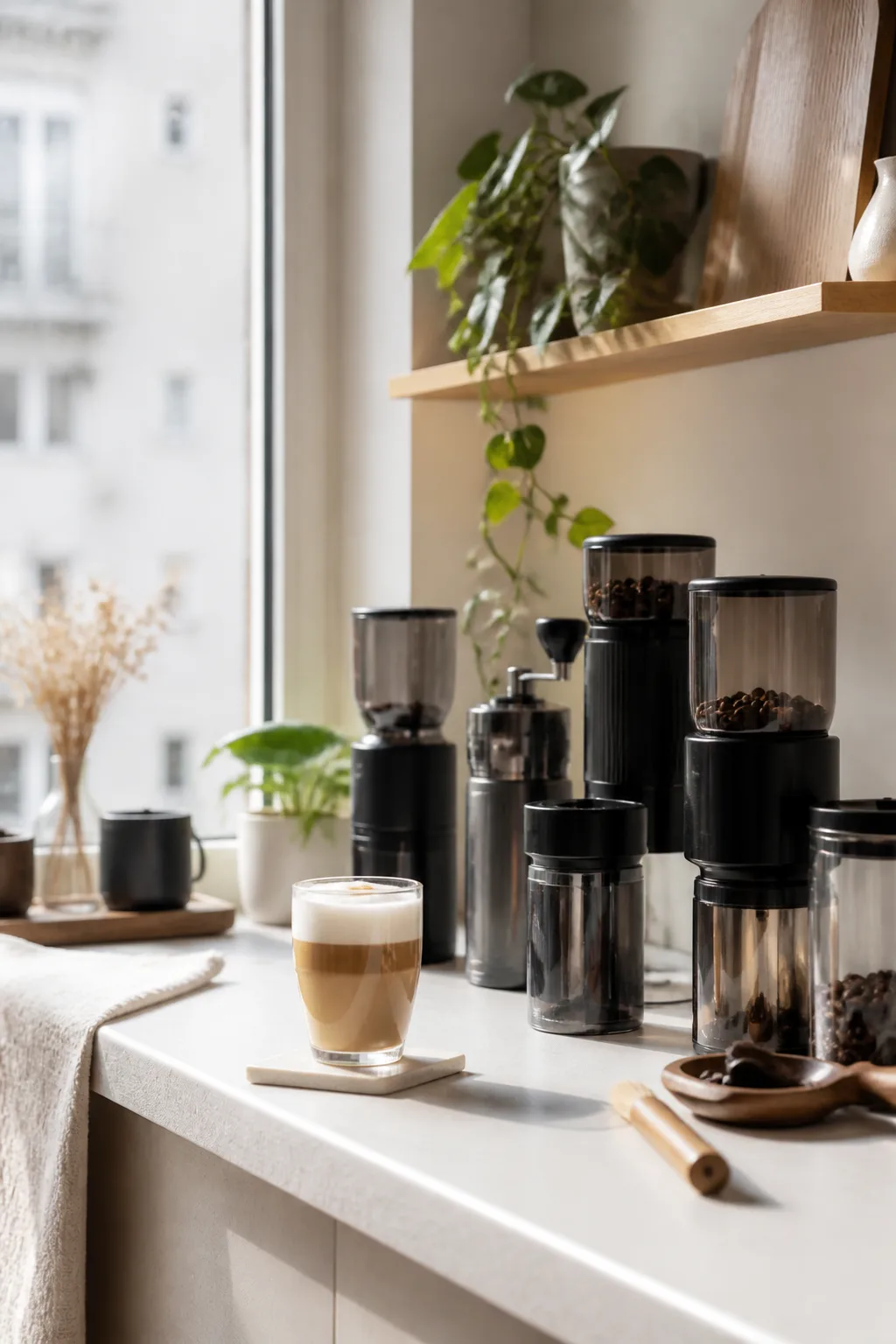
For a small apartment, the grinder decision starts with workflow: choose a manual grinder if drawer storage and quiet-by-design operation matter most; choose an espresso-capable electric grinder if you pull shots often; choose a filter-focused electric grinder if pour-over or drip is your only goal. This comparison uses manufacturer specifications available September 3, 2026. We did not test these grinders, so it does not rank cup quality, retention or measured noise.
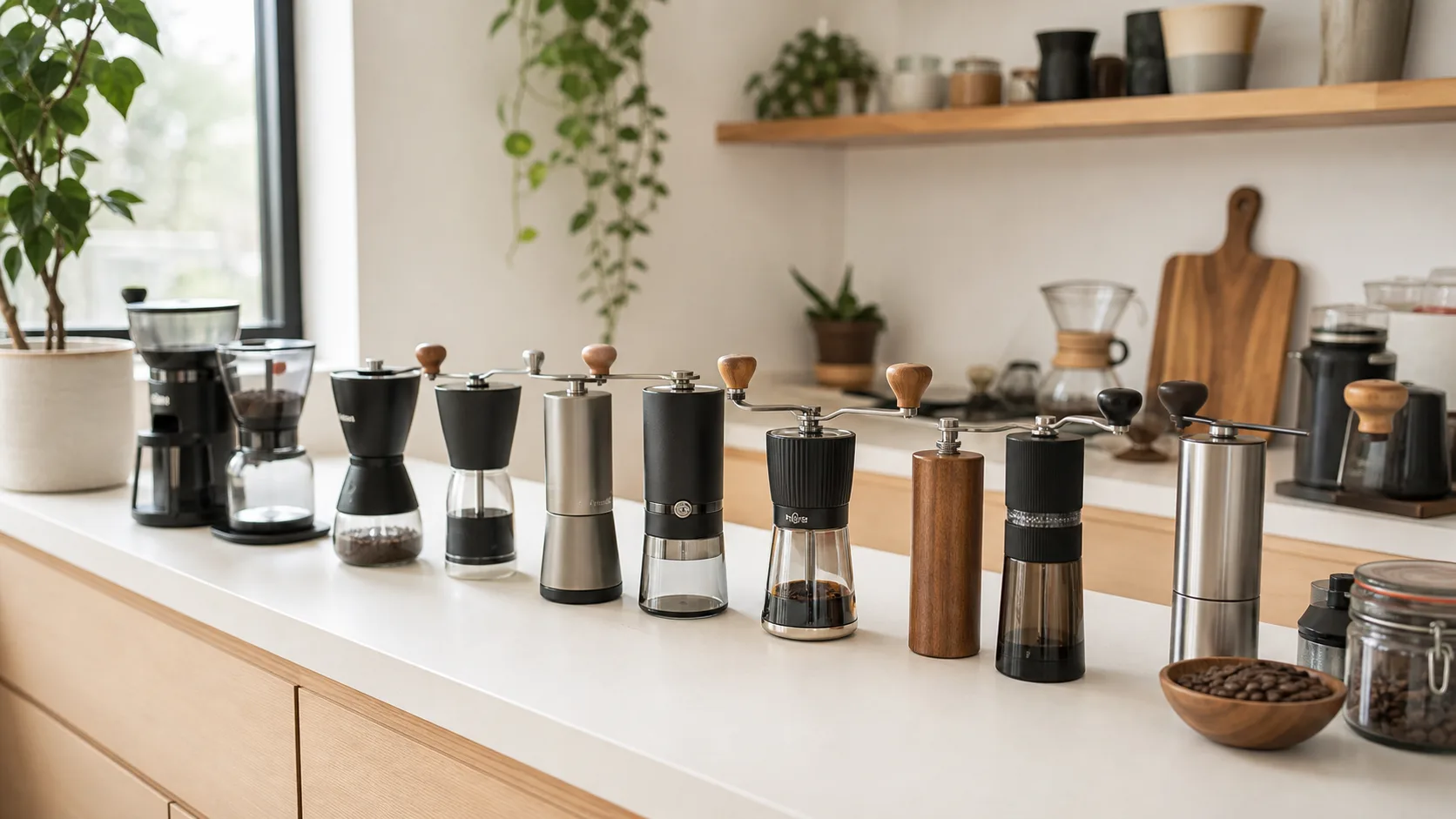
The ten-grinder shortlist
| Grinder | Power and workflow | Manufacturer-stated range | Size or capacity evidence | Best fit in a small apartment |
|---|---|---|---|---|
| OXO Brew Compact Conical Burr Grinder | Electric, small hopper | Fine to coarse; 15 settings and 29 micro-adjustments | 10.75 × 3.75 × 3.75 in; 50 g | Narrowest verified electric footprint here; filter-first buyers |
| TIMEMORE Chestnut C3 ESP Pro | Manual, folding handle | Espresso through French press; finer ESP dial | 20 g capacity | Drawer storage and one-person doses |
| KINGrinder K6 | Manual, external adjustment | Multiple brew methods; 60 clicks per rotation, 16 microns per click | 30–35 g hopper | Larger manual doses and external adjustment |
| 1Zpresso J-Ultra | Manual, external adjustment | Espresso-focused; 8 microns per click | 35–40 g capacity; manufacturer product page lists 19 × 18.5 × 5.5 cm | Fine espresso adjustment without a countertop motor |
| Baratza Encore ESP | Electric, hopper plus grounds bin | Settings 1–20 espresso; 21–40 filter, French press and cold brew | 13 × 15 × 34 cm; 300 g hopper | One electric grinder for espresso and brewed coffee |
| Fellow Opus 2 | Electric, single-dose workflow | Espresso through cold brew; stepless adjustment | 8.1 × 5.1 × 10.5 in; 100 g load bin | Low cabinet clearance and brew-method switching |
| Breville Smart Grinder Pro | Electric, timed hopper workflow | 60 settings, espresso through French press | 8.5 × 6.3 × 15.3 in | Users who want programmed time and portafilter cradles |
| Capresso Infinity Plus | Electric, timed hopper workflow | 16 settings, extra fine through coarse | 11.5 × 7.75 × 5 in as listed by Capresso; verify orientation against product diagram | Simple hopper workflow with removable upper burr |
| Fellow Ode Brew Grinder Gen 2 | Electric, single dose | Brewed coffee only; 11 settings and 31 total steps | 9.4 × 4.1 × 9.8 in; 100 g capacity | Pour-over/drip users who do not need espresso |
| Baratza Virtuoso+ | Electric, hopper and digital timer | Manufacturer positions it for precision brewed coffee | 13 × 15 × 34 cm; 300 g hopper | Filter-coffee routines that benefit from a 0.1-second timer |
Specifications do not prove which grinder tastes best or sounds quietest in your room. They narrow the list to models that match the intended brew method and physically fit; hands-on performance remains a separate question.
Smallest storage: four compact choices
The OXO Brew Compact is the clearest electric choice when counter width is the hard limit. OXO lists it at 3.75 inches wide and 10.75 inches tall, with a 50 g bean capacity. Its page describes fine-to-coarse settings rather than claiming dedicated espresso dialing, so treat it as a filter-first option unless your espresso machine and beans work within its range.
The three manual grinders remove the motor and cord from the counter. The TIMEMORE C3 ESP Pro has a 20 g capacity and folding handle; that is a natural one-dose format for many solo routines, but confirm that your usual recipe fits. The KINGrinder K6 increases stated capacity to 30–35 g and puts adjustment outside the body. The 1Zpresso J-Ultra holds 35–40 g and offers 8-micron-per-click adjustment aimed at espresso.
Manual does not automatically mean effortless. Bean density, grind fineness, grip strength and dose affect the work. If possible, handle the grinder or buy from a seller with a suitable return policy; manufacturer dimensions cannot tell you whether the diameter and crank feel comfortable.
One electric grinder for espresso and filter
The Baratza Encore ESP is the most legible dual-purpose option in this group. Baratza divides its 40-position dial: 1–20 for espresso and 21–40 for filter, French press or cold brew. It uses a 300 g hopper and manual pulse/on-off controls. Choose it when you want straightforward switching and do not need a programmed timer.
The Fellow Opus 2 takes a different approach: a 100 g single-dose load bin, stepless side adjustment and separate catch cups for brewed coffee and espresso. At 10.5 inches tall, it needs less vertical clearance than the 13.4-inch Encore ESP. A stepless dial supports fine changes, but returning precisely to a former setting depends on your own markings and routine.
The Breville Smart Grinder Pro favors hopper-based convenience. Breville lists 60 settings, a programmable timer adjustable in 0.2-second increments, an LCD and cradles for 50–54 mm and 58 mm portafilters. Its 15.3-inch height is the tallest verified dimension in this comparison, so measure with cabinet doors and hopper removal in mind.
Simpler hopper grinders
The Capresso Infinity Plus offers 16 marked settings, a 1-to-12-cup selector, pulse grinding and a removable upper burr. Capresso’s listed dimensions—11.5 × 7.75 × 5 inches—do not label width, depth and height on the page, so compare the product diagram or measure the unit before assuming which number is vertical.
The Baratza Virtuoso+ shares the Encore ESP’s listed 13 × 15 × 34 cm envelope and 300 g hopper, but adds a digital timer with 0.1-second resolution. Baratza presents it around brewed coffee rather than dividing the dial into a dedicated espresso range. Choose it for repeatable filter dosing; choose the Encore ESP when espresso is part of the brief.
Filter-only specialist
The Fellow Ode Gen 2 is intentionally not an espresso grinder. Fellow specifies 64 mm flat burrs, 11 settings with 31 steps, a 100 g load bin and a 9.4 × 4.1 × 9.8-inch body. It makes sense when your apartment station is dedicated to pour-over, drip, AeroPress, French press or cold brew. Its focused range is a reason to exclude it—not include it—if you expect to add an espresso machine.
Decide in five checks
- Name the finest method you will actually brew. Espresso buyers can remove the OXO Compact, Ode Gen 2 and likely Virtuoso+ from the primary shortlist; filter-only buyers do not need to pay in space or complexity for espresso adjustment.
- Tape the operating footprint. Include the crank sweep for a manual grinder and the open-hopper or burr-removal height for an electric model.
- Choose single dose or hopper. Single dosing makes bean changes direct; a hopper reduces daily measuring. Neither is universally better.
- Check the reset. Read the exact manual for burr access and cleaning. Confirm that the grounds container, brush and any portafilter cup have a place to live.
- Verify the live listing. Price, stock, warranty and included accessories can change. Recheck the US manufacturer page before purchase.
For the narrowest electric setup, start with the OXO Compact. For manual espresso, compare the J-Ultra’s finer stated adjustment with the K6 and C3 ESP Pro’s capacity and storage trade-offs. For one electric grinder spanning espresso and filter, compare the Encore ESP and Opus 2. For filter only, compare the compact OXO with the more specialized Ode Gen 2 and timed Virtuoso+.
Manufacturer sources
Continue reading
Related stories
equipment
Apartment Coffee Setup Guide
equipment
Best Espresso Machine for Beginners
equipment