Recipes
Brown Sugar Cold Foam Iced Latte
This recipe makes one 14-ounce iced latte with a coffee-forward base and a lightly sweet brown sugar cold foam.
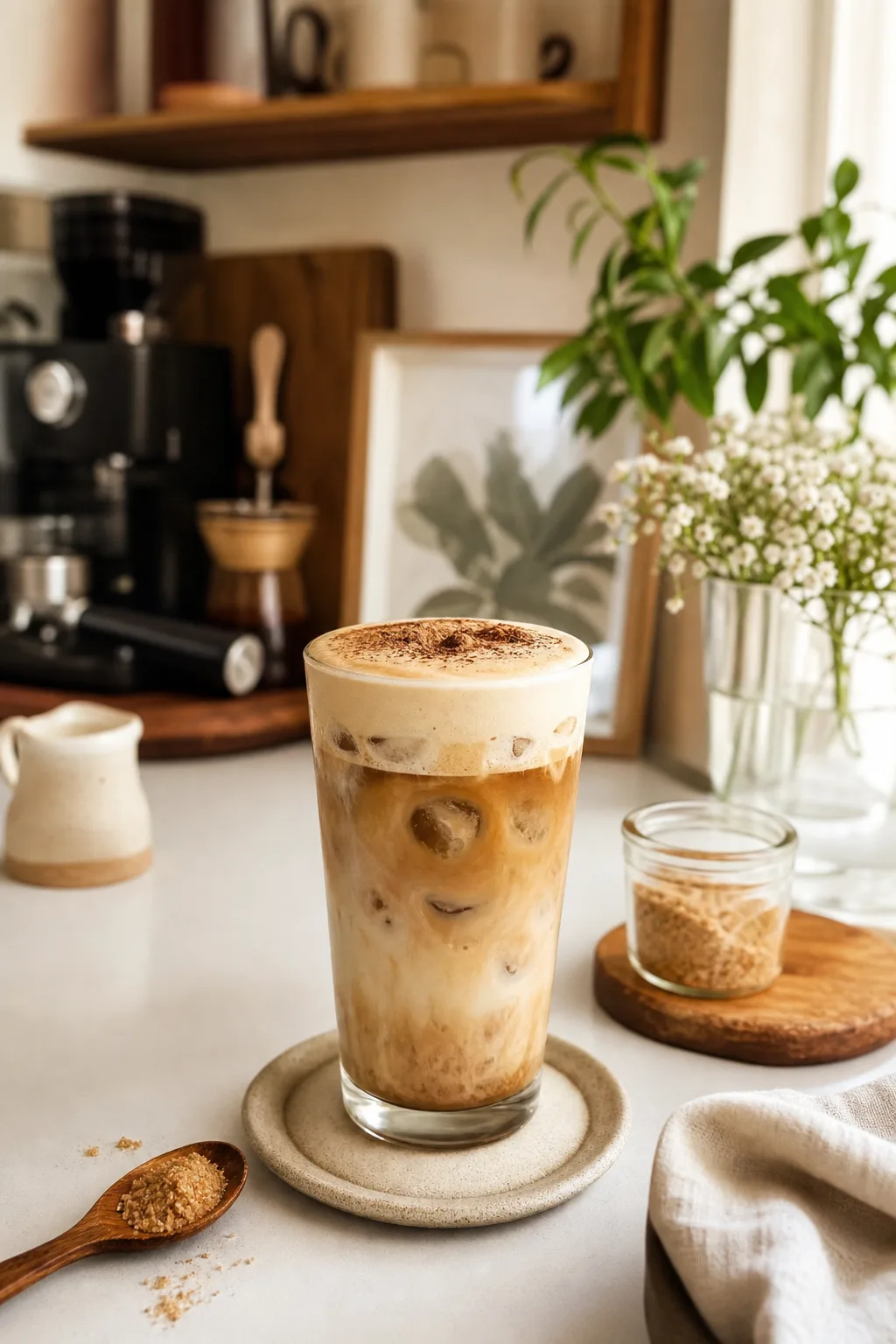
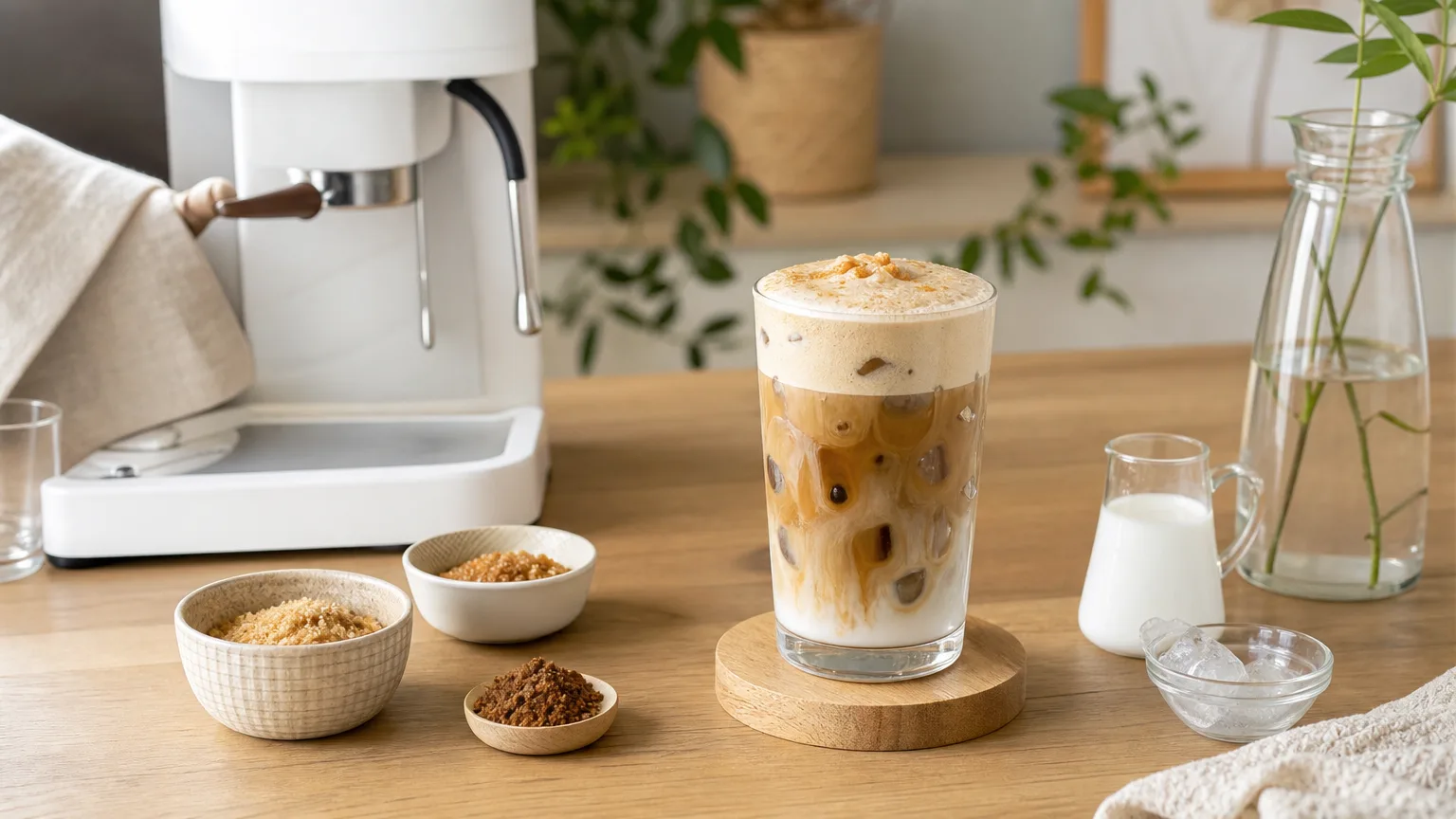
This recipe makes one 14-ounce iced latte with a coffee-forward base and a lightly sweet brown sugar cold foam. It uses strong brewed coffee or two espresso shots, so you can make it with or without an espresso machine.
Ingredients
Brown sugar syrup
- 1 tablespoon packed light brown sugar
- 1 tablespoon hot water
- Pinch of ground cinnamon, optional
Cold foam
- 1/4 cup cold 2% milk
- 1 tablespoon of the brown sugar syrup
Latte
- 4 ounces chilled strong coffee or 2 cooled espresso shots
- 1/2 cup cold milk or unsweetened plant milk
- 1 cup ice
Starbucks’ published at-home vanilla cold-foam recipe uses 1/4 cup 2% milk for one serving and says the milk can be frothed with a handheld tool or by hand. This version keeps that milk quantity but replaces powdered sugar and vanilla with homemade brown sugar syrup. It is a house recipe, not a copy of a current Starbucks menu drink.
Mix the syrup
Stir the brown sugar and hot water in a small cup until no dry sugar remains. Add cinnamon if you want a warmer flavor. The recipe makes about two tablespoons of syrup: one goes into the foam, and the remainder can be added to the coffee after tasting.
Make only what you need for the drink. A larger stored batch would require a separately tested storage formula and is outside this recipe.
Froth without a countertop machine
Pour 1/4 cup cold 2% milk and 1 tablespoon syrup into a container at least twice the volume of the liquid. Froth with a handheld wand for 20–30 seconds, moving near the surface until the mixture expands and looks finely bubbled.
Without a frother, use a clean jar with a tight lid. Shake the cold mixture for 30–45 seconds, then open it over the sink. Do not use this method with hot liquid.
The result is a pourable cold foam rather than stiff whipped cream. Spoonable peaks are not the target; the foam should spread across the ice and gradually mix into the drink.
Build the latte
- Fill a 14-ounce glass with ice.
- Add the chilled coffee or cooled espresso.
- Pour in 1/2 cup cold milk.
- Taste the base. Add the remaining syrup only if you want more sweetness.
- Pour or spoon the brown sugar foam over the top.
- Stir before the final third of the drink so the syrup does not concentrate at the bottom.
If you use hot espresso, let it cool briefly before pouring it over ice. The drink will still dilute as the ice melts, so use a coffee base that tastes stronger than you would drink hot.
Plant-milk version
Use oat milk in the latte base and a product labeled “barista” or formulated for foaming on top. Plant milks vary widely, so the same 20–30-second frothing time may not produce the same volume. Judge the foam by its surface and pourability rather than the clock.
If your plant milk does not foam, keep it in the base and make the topping with dairy 2% milk, or serve the drink without foam. The brown sugar flavor still works as syrup.
Troubleshooting
The foam disappears immediately
Start with colder milk and a narrower container, and keep the frother close to the surface instead of on the bottom. Avoid adding extra syrup to the foam; more dissolved sugar changes the mixture and makes this tested ratio less predictable.
The drink is too sweet
Keep only the tablespoon of syrup in the foam and leave the coffee base unsweetened. Next time, reduce the foam syrup to two teaspoons.
The latte tastes thin
Use two espresso shots or reduce the strong coffee to three ounces. Do not solve a weak coffee base by adding more syrup.
Large bubbles make the foam look soapy
Tap the container once on the counter and swirl it before pouring. With a handheld frother, use shorter pulses near the surface rather than holding the whisk in one place.
Serve and store safely
Use pasteurized milk and return it to the refrigerator promptly. The FDA advises keeping the refrigerator at 40°F or below and not leaving foods that require refrigeration at room temperature for more than two hours, or one hour when the air temperature is above 90°F. Make the foam for immediate service rather than holding it on the counter.
Sources
Continue reading