Lifestyle
Morning Coffee Ritual
A useful morning coffee ritual should fit the morning you actually have.

A useful morning coffee ritual should fit the morning you actually have. Choose the five-minute version for workdays, the 15-minute version when you want breakfast with your drink, and the 30-minute version when making coffee is part of a slower start. None requires a styled counter or new equipment.
The five-minute reset
This version is for getting a familiar drink made, enjoying the first few sips without multitasking, and leaving the station ready for tomorrow.
Minute 0–1: Start the drink. Fill the kettle, start the drip machine, or pull out the cold brew you prepared earlier. Use the method you already know; experimentation belongs on a less compressed morning.
Minute 1–3: Clear one surface. While water heats or coffee brews, put away one stray item and set out your mug. Do not turn this into a kitchen cleanup project.
Minute 3–4: Pour and pause. Finish the drink, then take the first three sips away from email and notifications. The boundary is the ritual; the mug is only the cue.
Minute 4–5: Reset. Discard grounds or a pod, rinse the tool that will become difficult to clean later, and put the coffee back in its place.
Prepare the night before if five minutes is still too tight: fill the reservoir, set out a filter, place the mug, and move cold ingredients to the front of the refrigerator. Do not program or energize an appliance in a way its manufacturer does not allow.
The 15-minute breakfast version
Use this when you want the drink to support breakfast rather than replace it.
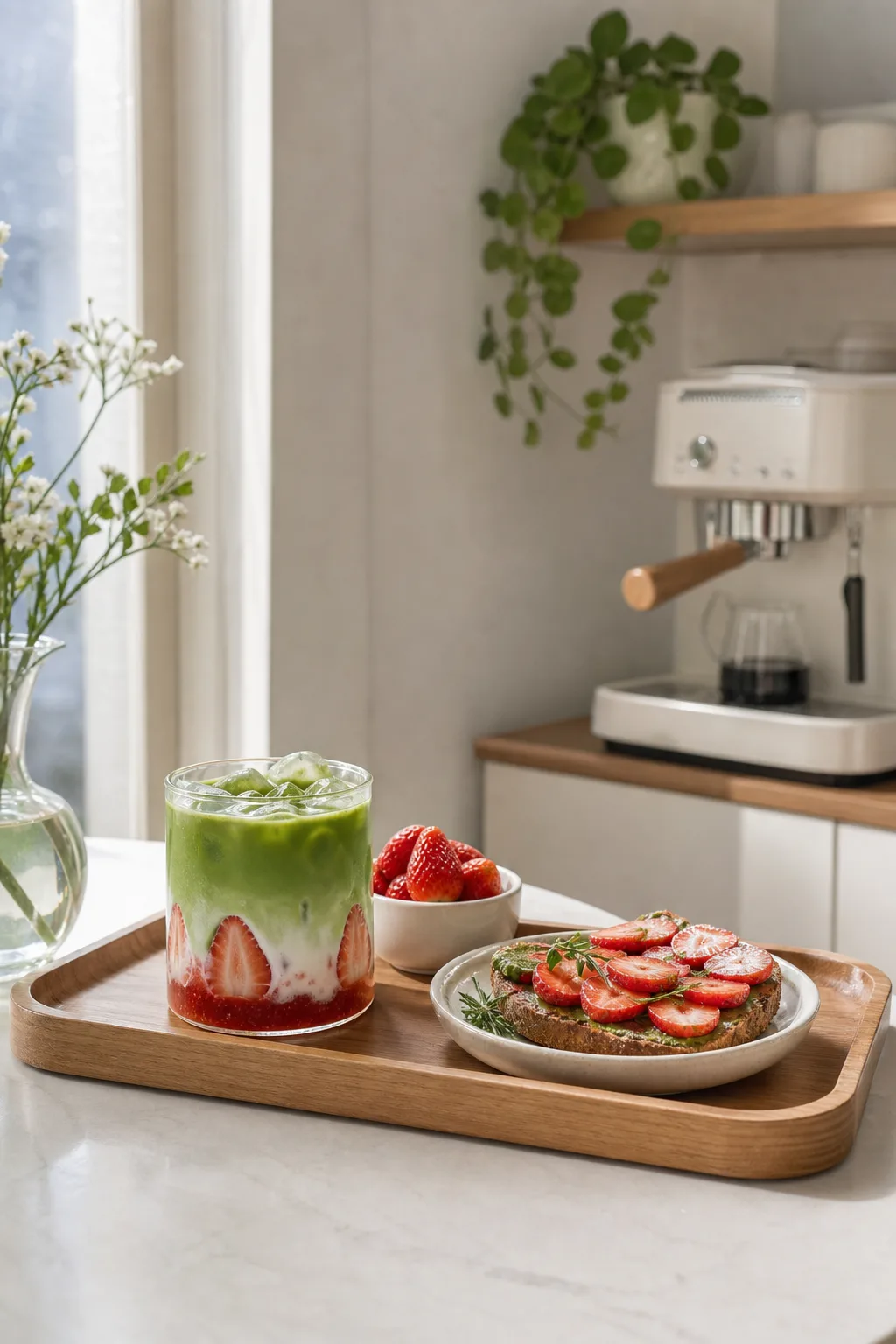
Minutes 0–4: Brew. Make your regular coffee or matcha. While it brews, assemble a simple breakfast you already keep at home—toast and fruit, yogurt and granola, or another low-prep option.
Minutes 4–10: Sit in one place. Carry both the drink and food to the table, desk, or window seat. Keep refills and condiments within one trip so the break does not become kitchen traffic.
Minutes 10–13: Decide the first task. Write one sentence: “When I finish, I will ___.” This is a transition cue, not a full planning session.
Minutes 13–15: Reset. Put food away, rinse the mug or brewing tool, and wipe any milk or coffee spill.
If the routine repeatedly runs over, reduce preparation rather than rushing the sitting portion. Use batch-made cold brew, pre-portioned beans, or a simpler breakfast.
The 30-minute slow version
This is a weekend or flexible-schedule ritual. Its purpose is attention, not technical perfection.
Minutes 0–8: Make one drink carefully. Try a recipe that benefits from a little attention: weigh beans, sift matcha, warm a mug, or froth milk. Change only one variable so you can remember the result.
Minutes 8–20: Pair it with one quiet activity. Read a few pages, write a short journal entry, listen to one side of an album, or sit by a window. Choose the activity before you start so the time does not disappear into scrolling.
Minutes 20–25: Record one useful note. Write the coffee, tea, or matcha used; the rough ratio; and one change for next time. A single line is enough: “Two teaspoons syrup was too sweet; use one next time.”
Minutes 25–30: Clean and stage. Wash the tool that needs immediate attention, refill filters or beans, and leave one cue for the next morning—usually a clean mug or an empty, ready workspace.
Build the ritual from three anchors
One drink anchor
Pick a dependable default: drip coffee, pour-over, instant coffee, cold brew, espresso, or matcha. A default reduces weekday decisions. Special recipes can remain occasional without making the routine feel incomplete.
One place anchor
Use the same practical place for the first few sips. In an apartment, that may be one chair, the end of a table, or a cleared section of desk. It does not need to be a dedicated coffee nook.
One closing anchor
Choose a tiny action that marks the transition: rinse the mug, open the blinds, write the first task, or start a particular playlist. The closing cue prevents the ritual from turning into indefinite delay.
Adjust it when mornings change
If you share a kitchen, move grinding or other noisy preparation to a time that works for the household. Pre-grind only when quiet matters more than optimizing freshness. If you leave early, make the sitting moment two minutes and move the longer ritual to a day off.
If caffeine does not suit your morning or affects you differently from someone else, choose decaf or a non-coffee drink. The FDA notes that caffeine sensitivity varies widely and cites 400 milligrams per day as an amount not generally associated with negative effects for most adults—not a target and not a personal guarantee. Pregnancy, medications, and health conditions can change the appropriate limit; ask a clinician when that applies.
A seven-day test
Use one version for a week before buying anything for it. At the end, answer three questions:
- Did the drink fit the available time?
- Which cleanup step created friction?
- Did the pause help the transition into the day, or would another time work better?
Keep the part that helped, remove the part that felt theatrical, and adjust the duration. The best ritual is not the prettiest one; it is the one that survives an ordinary Tuesday.
Source
Continue reading